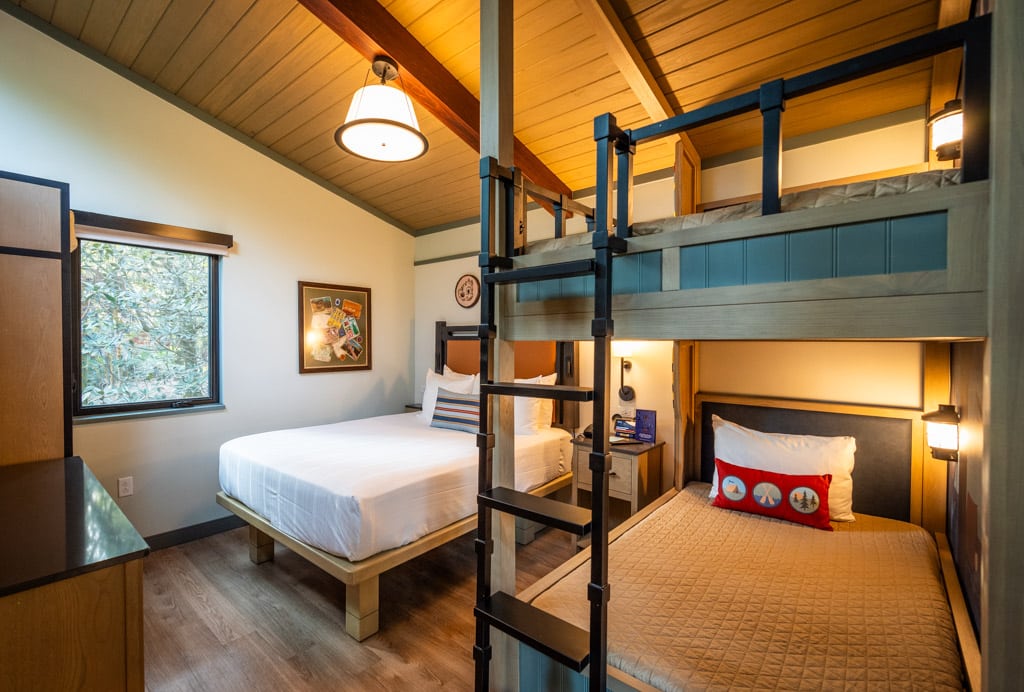
Top Family Suite Options: Professional Guide To Hotel Layouts
Top family suite options represent a specialized segment of the hospitality industry designed to balance collective engagement with individual privacy. For modern travelers, these accommodations serve as a critical infrastructure that facilitates smoother transitions between leisure and rest. For hospitality professionals, managing these units requires a sophisticated understanding of spatial dynamics and high-occupancy logistics.
The demand for high-capacity lodging has shifted from simple bed counts to complex architectural layouts. Modern travelers now prioritize functional zones that allow children and adults to coexist without constant physical overlap. This evolution reflects a broader trend in travel where the accommodation itself is viewed as a primary logistical asset rather than just a place to sleep.
Understanding the nuances of these configurations allows decision-makers to optimize their stay or their inventory. A well-designed suite mitigates the friction often associated with multi-generational travel by providing dedicated spaces for different activities. This analytical look at lodging explores the structural and operational factors that define high-quality family environments.
Top Family Suite Options
The core essence of top family suite options lies in the strategic separation of living and sleeping areas within a single legal unit. Think of these suites as a flexible ecosystem rather than a rigid room. Just as a well-planned office separates collaborative hubs from quiet work zones, a premium suite separates social areas from resting quarters.
Laypeople often mistake a suite for simply a larger room with more furniture. In contrast, professionals view these spaces through the lens of circulation paths and acoustic privacy. A true family suite provides a layout where one group can remain active—watching television or dining—while another group sleeps undisturbed in an adjacent, partitioned area.
Professional interpretations focus on the total square footage relative to the guest count, known as the person-per-square-foot ratio. When this ratio is optimized, the psychological stress of shared living decreases significantly. Misunderstandings often arise when hotels market “junior suites” which lack true physical partitions, leading to operational challenges for families requiring separate sleep schedules.
Architectural Dividers And Spatial Flow
The most effective suites utilize permanent architectural elements to define space. These may include pocket doors, frosted glass partitions, or separate hallways that lead to individual bedrooms. Such designs ensure that the common area remains the heart of the unit while preserving the sanctity of the sleeping zones.
Circulation is equally vital in these high-occupancy environments. If a guest must walk through a child’s sleeping area to reach the bathroom, the suite’s functional value drops. High-authority designs prioritize an “accessible-from-common-area” bathroom layout to prevent sleep disruptions and maintain privacy for all parties.
Acoustic Privacy Standards
Sound attenuation is a technical requirement that distinguishes elite options from standard offerings. Professionals evaluate these suites based on their Sound Transmission Class (STC) ratings. Internal walls within the suite should ideally match the soundproofing quality of external corridor walls to ensure that noise from the living area does not migrate into bedrooms.
Historical Evolution Of Family Lodging
Historically, family travel was serviced through the use of rollaway beds and “connecting rooms” which were often unreliable. The “old way” relied on the luck of availability, where families hoped that two adjacent rooms would have a connecting door. This created significant anxiety for parents and logistical headaches for hotel front desk staff during peak seasons.
The shift toward purpose-built suites began as hospitality brands recognized the growing market for multi-generational travel. Modern standards now dictate that these units are part of the primary floor plan from the design-build phase. This ensures that electrical loads, plumbing for multiple bathrooms, and HVAC zones are properly balanced for higher-than-average occupancy.
Outdated assumptions persist regarding the necessity of a kitchen. While older “extended stay” models mandated full stoves, modern standards often pivot toward high-end kitchenettes. These focus on convenience—high-speed microwaves, induction cooktops, and silent refrigerators—rather than full-scale meal preparation, reflecting how modern families actually utilize the space.
The Rise Of The Lifestyle Suite
Lifestyle-oriented hospitality has further refined the family unit by adding “thematic” zones. These are not merely decorated rooms but spaces designed for specific behaviors, such as gaming corners or integrated bunk zones. This shift treats the child as a distinct guest with unique spatial needs rather than an accessory to the adult guest.
This evolution also includes the integration of smart home technology. Modern suites allow for individualized climate control in each room, recognizing that thermal comfort varies across age groups. Such technical integration is now a benchmark for high-tier family accommodations.
Strategic Foundations And Mental Models
Selecting or designing top family suite options requires a mental model focused on “Occupancy Harmony.” This framework evaluates how the physical layout prevents common domestic conflicts. It looks at visual sightlines, auditory overlap, and the availability of “escape” spaces within the unit where a guest can find solitude.
Professionals often use the “Morning Rush” mental model. This involves simulating a scenario where four to six people are preparing for the day simultaneously. If the layout creates a bottleneck—such as a single vanity mirror or one power outlet near a mirror—the suite fails the operational test, regardless of its luxury finishes.
Another critical heuristic is the “Zone of Autonomy.” This suggests that teenagers and older children require a space where they can exercise agency over their environment. Suites that provide separate charging stations, light controls, and entertainment systems for the secondary bedroom satisfy this psychological need, leading to higher guest satisfaction scores.
The Privacy Utility Matrix
The Privacy Utility Matrix balances the cost of square footage against the value of seclusion. A suite with massive open space but no doors has high square footage but low privacy utility. Conversely, a smaller footprint with intelligent partitioning offers high privacy utility, often proving more valuable for families than a vast, open-plan penthouse.
Applying this model prevents the decision error of overpaying for “empty space.” Decision-makers should prioritize the number of doors and bathrooms over total floor area. This approach ensures that the budget is allocated toward elements that directly impact the quality of the stay.
Key Types And Variation Matrix
The landscape of family lodging includes several distinct variations, each catering to specific demographic needs and budget constraints. Understanding these “flavors” is essential for professional procurement and informed traveling. These options range from modular suites to expansive multi-room residences.
| Variation | Target Audience | Core Advantage | Trade-offs | Relative Complexity |
|---|---|---|---|---|
| Adjoining Suites | Multi-gen Families | Dual entries and maximum privacy. | Potential for disconnected feel. | Medium – Requires coordination. |
| Bi-Level Loft | Families with Teens | Vertical separation of zones. | Staircase safety for toddlers. | High – Architecture specific. |
| Bunk-Integrated Suite | Families with Young Children | Maximized sleeping in small footprint. | Lower adult-guest comfort in kids’ zone. | Low – Standardized layout. |
| Residential Apartment | Long-stay Travelers | Full kitchen and laundry facilities. | Higher cost and limited daily service. | High – Operational overhead. |
Choosing the right path depends on the “Duration-to-Independence” ratio. For short stays of one or two nights, a bunk-integrated suite provides sufficient utility. However, for stays exceeding four days, the residential apartment or adjoining suites become the professional standard to prevent guest burnout and maintain operational efficiency.
Modular Room Configurations
Modular suites use movable partitions or sliding wall systems to adapt to changing needs. This flexibility allows a two-bedroom suite to transform into a large meeting space or three separate smaller chambers. While mechanically complex to maintain, they offer the highest ROI for properties with fluctuating guest profiles.
Developers favor these because they allow for “dynamic inventory.” A single physical wing can be sold as a 3-bedroom suite or three separate king rooms depending on the booking demand. This architectural strategy is a hallmark of modern urban hotel design.
Real-world Scenarios And Applied Logic
Consider a multi-generational group including grandparents, parents, and two children. In this scenario, the top family suite options would be a three-room configuration with a central hub. The second-order consequence of choosing a standard single-room suite would be a total loss of privacy for the grandparents and increased stress for the parents, likely resulting in a negative review and low brand loyalty.
Another scenario involves a business traveler who is joined by family. Here, the “work-from-suite” logic applies. The suite must have a desk area in a zone that can be physically closed off from the children’s play area. Without this, the professional’s productivity drops, creating a conflict between personal and professional obligations.
For families traveling with infants, the “Sanitary Logistics” scenario is paramount. The suite must have easy access to a sink and refrigeration for bottles that is separate from the main bathroom. If the only sink is in the bathroom, it creates a cross-contamination risk and logistical friction that complicates the stay.
Second-order Consequences Of Layout Decisions
A poorly chosen layout often leads to increased housekeeping costs. In suites where the kitchen is far from the entrance, staff must transport trash through the entire living area, increasing the risk of carpet stains and odor lingering. Professional managers look for suites with a “service-friendly” flow to minimize these long-term maintenance costs.
Furthermore, the placement of the television can dictate the entire family’s schedule. If the primary screen is visible from the beds, it often leads to late nights for children. Strategic placement in a separate lounge area encourages a healthier sleep-wake cycle for all guests.
Planning, Cost, And Resource Dynamics
Budgeting for premium accommodations requires a look beyond the nightly rate. One must consider the value of “mitigated stress” and the potential savings from in-suite dining. Direct costs are easily identified, but the hidden costs of a poor stay—such as fatigue and the need for extra rooms at the last minute—are often overlooked by laypeople.
| Category | Entry-Level Scenario | Professional Standard | Enterprise/High-End | Key Nuance |
|---|---|---|---|---|
| Cost Per Night | $250 – $400 | $450 – $900 | $1,200+ | Price scales with square footage. |
| Square Footage | 450 – 600 sq ft | 800 – 1,200 sq ft | 1,500+ sq ft | Layout matters more than size. |
| Bathrooms | 1.0 – 1.5 | 2.0 | 2.5 – 3.0 | Critical for “Morning Rush.” |
| Kitchenette | Microwave/Mini-fridge | Wet Bar/Induction | Full Kitchen/Pantry | Reduces external dining costs. |
When analyzing these costs, remember that “cheap” often leads to “expensive.” A family that books a standard room to save $200 may end up spending more on snacks and room service because they lack storage or a prep area. Furthermore, the lack of separate space might lead to a shorter, less productive trip.
Budget Forecasting For Extended Stays
For professional relocation or long-term travel, the resource allocation shifts toward laundry and storage capacity. A suite that lacks a washer-dryer unit requires a separate budget for valet laundry services, which can exceed the nightly rate difference of a more expensive, better-equipped suite. Forecasting these operational expenses is vital for ROI-focused readers.
Storage is another hidden asset. A suite with minimal closet space leads to “clutter fatigue,” where the living area becomes a storage zone for suitcases. High-end options provide walk-in closets or luggage nooks, keeping the living space clear and psychologically calming.
Professional Tools And Strategy Ecosystems
Professionals in the hospitality sector use specific tools to manage top family suite options. Property Management Systems (PMS) allow hotels to track the specific features of each suite, ensuring that a family needing a crib or high chair is placed in a unit with the appropriate floor space. These systems integrate with revenue management software to price suites based on real-time demand.
Floor plan visualization tools are another critical asset. These allow prospective guests to “walk through” the layout virtually. For a family, seeing the physical distance between the master bedroom and the children’s bunk area is more valuable than any marketing description. It solves the real problem of spatial uncertainty.
However, professionals must watch for “Inventory Fragmentation.” If a hotel has too many unique suite types, the booking process becomes confusing for the guest and difficult for the staff to manage. The strategy is to standardize “clusters” of suite types to provide consistency while still offering enough variety to meet different family needs.
Integration With Digital Concierge Systems
Modern suite ecosystems often include digital concierge tablets. These allow families to request extra towels, order room service, or book local activities without leaving their room. For a parent managing multiple children, this reduces the friction of calling the front desk and waiting on hold, integrating the service directly into the living environment.
Strategic integration also involves the hotel’s loyalty program. High-value guests often receive “Suite Upgrades” based on their status. For a hotel, this is a tool to fill premium inventory during off-peak times while increasing the lifetime value of the customer. It is a win-win strategy that relies on robust data analytics.
Risk Landscape And Failure Modes
The risks associated with family suites range from physical safety to operational failures. A common structural risk is the “Balcony Hazard.” In high-rise hotels, suites with balconies require specific lock mechanisms and railing heights that exceed standard codes to protect children. Failure to maintain these is a catastrophic risk for the operator.
Operational errors often manifest as “Adjoining Room Failures.” This occurs when a family is promised connecting rooms, but upon arrival, the hotel has assigned those rooms to different guests. This breaks the “suite” experience and leaves the family separated, creating a major service failure that is difficult to rectify during high occupancy periods.
Human error involves the misconfiguration of the room by housekeeping. If a “family” suite is prepared with a “business” amenity kit—lacking cribs or having sharp-cornered furniture—it creates a mismatch between the product and the user. These small errors compound into a feeling that the hotel is not truly family-friendly.
Mitigating Systemic Failures
To mitigate these risks, professional managers implement redundant verification systems. The front desk should confirm the exact suite layout and any requested amenities (like bed guards) 24 hours before arrival. This proactive approach catches errors before the guest ever reaches the property.
From a design perspective, “Soft-Cornering” and “Anchor-Testing” furniture is a practical mitigation. Ensuring that all heavy units are anchored to walls prevents tipping accidents. These are neutral, practical steps that elevate a standard room to a professional-grade family suite.
Governance And Long-term Mastery
Static systems in hospitality fail because guest needs and wear-and-tear patterns change. A suite that was “top tier” five years ago may now have outdated charging ports or worn upholstery that doesn’t hold up to the rigors of family use. Mastery of this niche requires “Dynamic Adaptation.”
Governance involves a strict maintenance schedule that accounts for the higher impact of multiple guests. Family suites typically require a deeper cleaning cycle and more frequent furniture replacement than standard king rooms. Without this, the property quickly loses its premium status.
- Quarterly audit of all mechanical partitions and sliding door tracks.
- Biannual deep-steam cleaning of all upholstered surfaces and carpets.
- Annual review of integrated technology and charging infrastructure relevance.
- Monthly inspection of safety features including locks, smoke detectors, and window guards.
- Ongoing staff training on “Family Sensitivity” and high-occupancy service protocols.
Focusing on these cycles ensures that the quality and relevance of the top family suite options are preserved. It moves the management style from “reactive repair” to “proactive stewardship,” which is the hallmark of a world-class hotel operation.
Measurement And Tracking Success
To evaluate the performance of these accommodations, professionals use a mix of leading and lagging indicators. A leading indicator might be the “Pre-Arrival Engagement Rate”—how many guests respond to emails asking for specific suite configurations. High engagement suggests that the suite is being marketed to the right demographic.
A lagging indicator is the RevPAR (Revenue Per Available Room) specific to the suite category. If the family suites consistently outperform standard rooms in occupancy and rate, it proves the investment was sound. Another critical metric is the “Guest Sentiment Score” filtered specifically for families, which provides qualitative data on the suite’s layout and amenities.
A professional proves success to stakeholders by showing a direct correlation between suite quality and repeat booking rates. Families are notoriously loyal to properties that “get it right.” Documenting this loyalty through guest history data is the most powerful way to justify the higher operational costs of maintaining premium suites.
Reporting Examples For Stakeholders
A monthly report might include a “Turnover Efficiency” metric. This tracks how quickly a large suite can be reset for the next guest without sacrificing cleaning standards. If a 1,200 sq ft suite takes four times longer to clean than a 400 sq ft room, the price must reflect that labor intensity to maintain profitability.
Furthermore, “Amenity Utilization” reports show which features are actually used. If the “gaming console” is rarely touched but guests are constantly asking for more kitchen towels, the professional strategist pivots the resource allocation accordingly. This data-driven approach ensures the suite remains a high-functioning asset.
Common Misconceptions And Reality Filters
One prevalent myth is that “More Beds Equals a Better Family Suite.” In reality, a room with four beds but no walking space is a dormitory, not a suite. The top family suite options are defined by the quality of the living space and the ability for guests to move around without stepping over luggage.
Another misconception is that higher prices always equate to better soundproofing. Many “luxury” suites are built in older, historic buildings where the walls are surprisingly thin. Professionals know to check the “Modern Renovation” date to ensure the infrastructure behind the walls has been updated to current acoustic standards.
Some believe that “Kids’ Clubs” can compensate for a poor room layout. While amenities are nice, the majority of a family’s time is spent within the suite. A great kids’ club cannot fix the frustration of a family of five sharing one small bathroom and a single vanity.
The Reality Of “free” Upgrades
Many travelers assume they can book a standard room and “talk their way” into a family suite. This rarely works during peak family travel periods because these suites are usually the first to be booked at full price. The reality is that if you need the space, you must book it in advance; relying on upgrades is a high-risk strategy that often leads to disappointment.
Finally, there is a myth that suites are only for the wealthy. When you factor in the cost of two separate rooms plus the convenience of a kitchen, a family suite is often more cost-effective for a group of four or more. It is a value-driven choice rather than a purely decadent one.
Ethical And Practical Limits
There are practical boundaries to what a family suite can provide. Fire codes and local ordinances strictly limit “Maximum Occupancy.” A suite may look large enough for eight people, but if the fire code says six, the hotel cannot legally allow more. This is a non-negotiable limit that professionals must strictly enforce.
Accessibility is another contextual constraint. While a bi-level loft is stylish, it may be entirely impractical for a family with a member who has mobility issues. A “top” option must be evaluated through the lens of universal design to ensure it serves the widest possible audience without creating barriers.
When should you not use a family suite? If the group is composed of older adults who each require complete nocturnal isolation and separate bathrooms, two distinct hotel rooms are often better than one suite. The “Common Area” of a suite is only a benefit if the group actually intends to socialize in private; otherwise, the cost premium is wasted.
The Constraint Of The Current Era
In the current era, digital bandwidth is a hard limit. A suite housing five people with ten devices requires a robust dedicated Wi-Fi access point within the room. A suite with “dead zones” in the secondary bedroom will result in guest dissatisfaction regardless of how plush the towels are. This technological infrastructure is now a fundamental requirement.
Sustainability also poses a limit. Large suites consume significantly more energy for heating and cooling. Modern governance requires “Smart Thermostats” that detect occupancy to reduce the carbon footprint of these larger units. Balancing luxury and space with environmental responsibility is the current challenge for the industry.
Conclusion: Logic Synthesis
The pursuit of top family suite options is a balance between architectural intent and operational execution. It requires a shift from viewing lodging as a commodity to viewing it as a curated environment. Success is not measured by the number of pillows, but by the lack of friction in the guest’s daily routine.
For the professional, this means investing in layouts that prioritize acoustic privacy, bathroom ratios, and serviceability. For the traveler, it means looking beyond the “luxury” labels to find functional floor plans that respect the autonomy of each family member. The ultimate goal is a space that facilitates connection while preserving the individual’s right to rest.
Mastery of this domain involves constant refinement and a deep understanding of human behavior in shared spaces. As travel continues to evolve, the most successful accommodations will be those that adapt to the complex, multi-faceted needs of the modern family. True quality is found where rigorous systemic process meets intuitive human judgment.
Frequently Asked Questions
What Is The Main Difference Between A Family Suite And Connecting Rooms?
A family suite is a single, cohesive unit often with a shared common living area and a single entrance. Connecting rooms are two separate standard rooms with an internal door between them, which may not always be guaranteed by the hotel until check-in.
How Many Bathrooms Should I Look For In A Suite For Four People?
For a group of four, two full bathrooms are the professional standard to avoid bottlenecks. If a suite only offers 1.5 bathrooms, expect significant delays during the morning and evening routines.
Are Kitchenettes In Family Suites Worth The Extra Cost?
Yes, if the stay exceeds three nights. The ability to store cold drinks, prepare simple breakfasts, and handle leftovers can save a family of four significantly on room service and restaurant costs, often offsetting the higher room rate.
What Should I Look For In A Suite To Ensure A Quiet Sleep?
Check for “True Partitioning” with solid doors rather than curtains or open archways. Additionally, ask if the suite has “Double Glazing” on windows and check reviews for mentions of soundproofing between the living area and the bedrooms.
Are Family Suites Accessible For Strollers And Wheelchairs?
Not always. While many modern suites are ADA-compliant, some “Bi-level” or “Loft” options involve stairs. Always confirm the presence of an elevator and wide doorways if you are traveling with a stroller or have mobility requirements.