Strategic Guide To Executive Suite Booking Plans For Pros
Executive suite booking plans represent a strategic intersection between corporate procurement and high-end hospitality services. These frameworks allow organizations to secure premium accommodations that facilitate both rest and high-level productivity for their leadership teams. As global business travel becomes more complex, the methods used to reserve these specialized spaces must evolve beyond simple transactional interactions.
For the modern professional, a suite is more than a luxury; it is a mobile office and a secure environment for confidential discussions. Consequently, the logic behind selecting a specific plan involves balancing fiscal responsibility with the operational needs of high-value personnel. This guide explores the systemic nuances of managing executive stays within the global hospitality landscape.
The current market landscape shows a distinct shift toward personalized corporate agreements that prioritize flexibility. Companies are no longer satisfied with static rates that do not account for seasonal fluctuations or varying occupancy levels. Understanding the mechanics of these plans is essential for travel managers and executive assistants who oversee significant travel budgets.
Executive Suite Booking Plans
The core essence of executive suite booking plans lies in their ability to guarantee availability and service standards in a volatile market. Think of these plans as a subscription to a premium infrastructure rather than a one-off rental of a hotel room. This approach ensures that when a high-stakes meeting or negotiation occurs, the environment is already optimized for success.
In a professional context, these plans are often misinterpreted as mere discounts on expensive rooms. However, the true value resides in the “soft” benefits, such as early check-in, late check-out, and access to private meeting facilities. These elements reduce the friction of travel, allowing an executive to transition seamlessly from transit to a professional mindset.
Common misunderstandings often arise regarding the difference between a standard corporate rate and a suite-specific plan. While a corporate rate might apply to any room in the hotel, a suite-specific plan addresses the unique inventory constraints of premium rooms. Because suites are limited in number, the booking logic must be more robust to prevent displacement during peak periods.
From a strategic standpoint, an effective plan acts as a hedge against the uncertainty of the open market. By establishing clear terms for suite access, a corporation can stabilize its travel spend while maintaining a high standard of care for its employees. This stability is vital for long-term fiscal planning and organizational agility.
The Architecture Of Premium Inventory
Hotels view executive suites as high-yield assets that require specific management strategies. Unlike standard rooms, which can be sold in bulk, suites are often protected to ensure they are available for high-value guests or loyal corporate partners. This scarcity creates a need for formal booking plans that define how this inventory is allocated and priced.
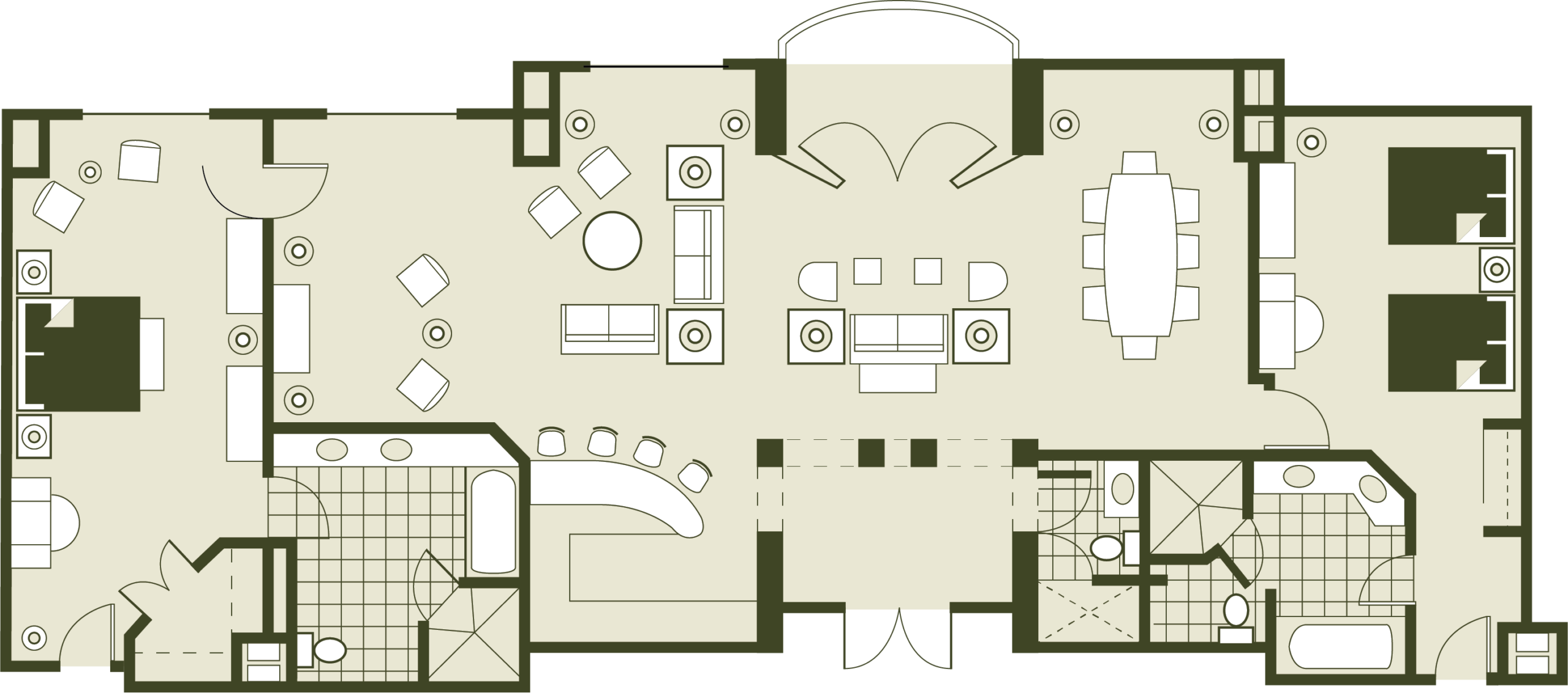
The physical layout of these suites often includes separate living and working areas, which changes the value proposition for the business traveler. When a booking plan is well-structured, it accounts for the utility of these spaces for small-group meetings or private dining. This versatility justifies the higher price point compared to standard executive rooms.
Balancing Luxury With Functional Utility
An executive suite booking plan must prioritize functional utility over purely aesthetic luxury. While high-end finishes are expected, the presence of reliable high-speed internet, ergonomic workstations, and soundproofing is what truly defines the “executive” experience. Professional planners look for these technical specifications before finalizing any long-term agreement.
Furthermore, the integration of technology within the suite can significantly impact the effectiveness of the stay. Modern plans often include provisions for technical support or specialized equipment, such as high-definition monitors or secure printing. These details ensure that the suite serves as a legitimate extension of the corporate office.
Historical Evolution Of Executive Hospitality
The “old way” of securing premium accommodations relied heavily on personal relationships between travel secretaries and hotel general managers. Bookings were often made via telephone, and rates were negotiated on a case-by-case basis without the benefit of data-driven insights. This localized approach made it difficult for global companies to maintain consistency across different regions.
As the hospitality industry entered the digital age, Global Distribution Systems (GDS) began to standardize how suites were inventoried and sold. This shift allowed for the creation of more formal executive suite booking plans that could be managed centrally. However, early systems often struggled to communicate the specific nuances and amenities associated with different suite tiers.
The modern standard has evolved into a highly analytical process that utilizes big data and real-time inventory management. Hotels now use sophisticated revenue management systems to price suites dynamically based on demand, while corporations use procurement software to track every dollar spent. This transparency has led to more equitable agreements but also requires a higher level of professional expertise to navigate.
The Transition From Prestige To Performance
Historically, booking a suite was seen primarily as a status symbol for high-ranking officials. While prestige remains a factor, the focus has shifted toward the “performance” of the stay. Current executive suite booking plans emphasize the reduction of travel fatigue and the maximization of the executive’s time, reflecting a more practical approach to luxury.
This evolution mirrors broader trends in the corporate world, where every expense is scrutinized for its return on investment (ROI). If a suite allows an executive to avoid an extra day of travel by hosting meetings on-site, the higher room rate is easily justified. This performance-based logic is the cornerstone of modern procurement strategies in the travel sector.
The Impact Of Global Connectivity
The rise of global business hubs in the Middle East, Asia, and Latin America has forced executive suite booking plans to become more culturally and operationally adaptable. A plan that works well in London may not be suitable for Tokyo or Dubai due to different expectations regarding service and privacy. Global planners must now account for these regional variations within a single framework.
In addition, the 24/7 nature of global business means that the traditional check-in and check-out windows are often obsolete for executives. Modern plans are increasingly incorporating flexible timing to accommodate international flight schedules. This flexibility is a direct result of the industry’s need to adapt to a non-stop global economy.
Strategic Frameworks And Mental Models
When evaluating executive suite booking plans, professional decision-makers often utilize the “Productivity vs. Cost” mental model. This framework suggests that the cost of a suite is negligible compared to the potential loss of productivity from an exhausted or ill-equipped executive. By framing the stay as an investment in human capital, the decision becomes much clearer.
Another useful framework is the “Total Cost of Trip” (TCT) model. Instead of looking at the room rate in isolation, TCT considers the savings gained from using the suite as a meeting space, reduced dining out, and the executive’s time efficiency. Often, a more expensive suite plan results in a lower TCT by consolidating activities within a single, high-quality environment.
The “Inventory Risk” model is also critical for professionals to understand. This involves assessing the likelihood of a hotel being sold out during major industry events. A structured booking plan often includes “Last Room Availability” (LRA) clauses, which ensure that the corporation can book a suite at the contracted rate even when the hotel is near capacity.
Heuristic For Suite Selection
A simple heuristic for laypeople is the “Third Space” rule. An executive suite should serve as a third space that is neither a typical bedroom nor a sterile office cubicle. If the plan does not provide a space that facilitates both deep focus and professional hospitality, it is likely not a true executive suite booking plan but rather a glorified standard room.
For professionals, the “Friction Factor” heuristic is more appropriate. This involves auditing every step of the travel process—from the moment the car arrives at the hotel to the moment of departure. Every point of friction that is eliminated by the booking plan (such as bypass check-in or dedicated concierge) increases the value of the agreement exponentially.
The Decision Error Framework
One common decision error is over-prioritizing the nightly rate while ignoring “attrition” or “cancellation” penalties. A low rate is of no value if the company is forced to pay for rooms that are not used due to shifting schedules. Professional planners prioritize flexibility over the absolute lowest price to avoid these hidden financial traps.
Another error is failing to verify the “Executive Tier” parity across a hotel chain. A “Junior Suite” in one property might be significantly smaller or less equipped than in another. Professional models require specific square footage and amenity guarantees to ensure that the executive’s experience is consistent across all global locations.
Key Types And Nuances Of Booking Plans
Understanding the variations in executive suite booking plans is essential for tailoring a strategy to an organization’s specific needs. These plans are generally categorized by the level of commitment and the degree of price protection they offer. Choosing the wrong type can lead to either wasted budget or a lack of necessary accommodations.
| Variation | Target Audience | Core Advantage | Trade-offs | Relative Complexity |
|---|---|---|---|---|
| Fixed-Rate Annual | Large Enterprises | Budget Predictability | Potential for “Blackout” Dates | Moderate |
| Dynamic Discount | Mid-Sized Growth Firms | Access to Market Lows | Price Volatility at Peak | Low |
| Inventory Block | Event Organizers / M&A Teams | Guaranteed Availability | High Financial Liability (Attrition) | High |
| Membership/Loyalty Based | Individual Executives / Startups | Enhanced Service Tiers | Lack of Direct Negotiation Power | Minimal |
Deciding which path to take depends largely on volume and the predictability of travel. If a company sends executives to the same city every month, a Fixed-Rate Annual plan is usually the most efficient. However, if travel is sporadic and spread across multiple destinations, a Dynamic Discount plan integrated with a major hotel loyalty program may provide better long-term value.
The Fixed-rate Model In Detail
The Fixed-Rate model provides a sense of security for both the buyer and the seller. The hotel receives a guaranteed baseline of high-value business, while the corporation locks in a price that won’t be affected by local events or surges in demand. This is particularly valuable in cities with high-occupancy rates where suite prices can quadruple during major conventions.
However, the negotiation process for these rates is intensive. It requires a detailed analysis of past travel patterns and a commitment to a certain number of “room nights” per year. If the corporation fails to meet these quotas, the hotel may revoke the discounted rate in subsequent years or charge a penalty, making it a high-stakes decision for procurement officers.
Dynamic Pricing And Market Sensitivity
Dynamic pricing plans are becoming more popular as hotels move toward sophisticated revenue management. These executive suite booking plans typically offer a percentage discount (e.g., 15-20% off) from the “Best Available Rate” (BAR). This allows the company to benefit when market demand is low, though it exposes them to higher costs during busy periods.
The nuance here is the “ceiling rate” or “cap.” Some dynamic agreements include a provision that the rate will never exceed a certain amount, regardless of how high the market rate goes. This hybrid approach offers the best of both worlds—market-driven savings during quiet times and protection against price gouging during peak season.
Real-world Scenarios And Applied Logic
Consider a scenario where a multinational corporation is undergoing a high-stakes merger and acquisition. The legal and executive teams need to be stationed in a specific city for six weeks. In this case, an “Inventory Block” plan is the only logical choice, as it ensures the entire team stays in the same secure environment with access to private working suites.
The second-order consequence of this decision is the impact on team morale and security. By keeping the team in a controlled environment, the risk of data leaks or accidental overhearings in public hotel areas is minimized. The “cost” of the suite is thus partially an investment in operational security and confidentiality.
Another scenario involves a regular “Roadshow” for an investor relations team. They might visit five cities in five days. A “Loyalty-Based” plan across a global hotel chain ensures that the executive receives the same level of service and room layout in every city. This consistency reduces cognitive load, allowing the executive to focus entirely on their presentations.
Managing Crisis-driven Travel
In the event of a corporate crisis, executives may need to be deployed to a remote location with very little notice. A robust executive suite booking plan often includes “Priority Waitlist” status. This means that if a suite is not currently available, the company’s executives move to the top of the list for the next available unit, which is crucial during emergency operations.
The outcome of having this priority is often the difference between an executive being on-site within hours or being stuck in a different city. Professional travel planners view these clauses as essential risk mitigation tools. While they may not be used often, their value during a crisis is immeasurable.
The Long-term Stay Scenario
Sometimes an executive is relocated or assigned to a long-term project that lasts several months. In these instances, standard executive suite booking plans are often swapped for “Extended Stay” suite agreements. These plans typically involve a sliding scale of costs: the longer the stay, the lower the daily rate.
The practical outcome here is a more “home-like” environment for the executive, which can include kitchen facilities and more extensive living space. From a corporate perspective, these plans often include a flat monthly fee that simplifies accounting and reduces the administrative burden of processing daily hotel invoices.
Planning, Cost, And Resource Dynamics
Budgeting for executive suite booking plans requires a move away from “average room rate” thinking toward “strategic resource allocation.” The direct cost is the nightly rate, but the hidden costs often involve premium services like high-speed dedicated bandwidth, valet parking, and club lounge access fees. These should be negotiated as part of a bundle whenever possible.
Opportunity cost is also a major factor. If an executive has to spend 45 minutes commuting from a lower-cost hotel to a meeting center because a suite wasn’t available in the primary location, the company has effectively lost 45 minutes of a high-value salary. A well-placed suite eliminates this waste, making the “expensive” room the more economical choice in a holistic sense.
| Category | Entry-Level Scenario | Professional Standard | Enterprise/High-End | Key Nuance |
|---|---|---|---|---|
| Nightly Rate Range | $350 – $600 | $650 – $1,200 | $1,500 – $5,000+ | Varies by City/Demand |
| Negotiation Lever | Personal Loyalty | Volume Commitments | Strategic Partnership | Leverage increases with spend |
| Service Level | Standard Concierge | Dedicated Account Manager | 24/7 Lifestyle Butler | Human touch is key |
| Cancellation Policy | 24-48 Hours | Same-Day / 6 PM | Full Flexibility | Flexibility has a premium |
A “cheap” plan often leads to “expensive” outcomes when hidden fees for internet, breakfast, and meeting room rentals are added. Professional planners usually insist on an “all-inclusive” suite rate that covers these basics. This not only makes the bill more predictable but also removes the “nickel-and-diming” experience for the executive.
Forecasting Future Travel Spend
Accurate forecasting for executive suite booking plans involves looking at historical data while adjusting for future corporate initiatives. If the company plans to expand into a new territory, the travel budget must reflect the local hotel market dynamics of that specific region. This proactive approach prevents budget overruns and ensures that leadership is properly supported during expansion.
Furthermore, seasonality must be built into the forecast. Many organizations fail to account for the fact that a suite in New York or London can double in price during fashion weeks or major UN summits. A professional budget includes a “Market Volatility Buffer” to account for these unavoidable spikes in the hospitality market.
Resource Allocation And Staffing
Securing and managing these plans also requires human resources. Large organizations often have a dedicated travel desk or an outsourced Travel Management Company (TMC). The cost of these professionals is part of the overall investment in a successful booking strategy. Their expertise in auditing hotel bills and enforcing contract terms often saves the company more than their own salary cost.
Smaller companies might rely on executive assistants to manage these relationships. In this case, providing those assistants with the proper training and tools to understand hospitality contracts is a vital resource allocation. Without this knowledge, the company is at a disadvantage when negotiating with professional hotel sales teams.
Tools, Strategies, And Ecosystems
The real problem that professional tools solve in the context of executive suite booking plans is “inventory visibility.” Professionals use Global Distribution Systems like Sabre or Amadeus to see real-time availability across thousands of hotels. Without these systems, a travel manager is essentially flying blind, relying on outdated information from individual websites.
Another critical strategy involves the use of “Rate Auditing” software. These tools automatically monitor the price of a suite after it has been booked. If the price drops, the software alerts the travel manager to re-book at the lower rate. This ensures that the company is always paying the lowest possible price, even within a structured plan.
However, these tools have hidden limitations. For instance, many automated systems cannot “see” the specific amenities or “soft” perks negotiated in a private corporate contract. This is where human expertise remains essential. A professional must ensure that the automated booking still triggers the “VIP” flags in the hotel’s Property Management System (PMS).
Integration With Corporate Expense Systems
For an executive suite booking plan to be effective, it must integrate seamlessly with corporate expense management tools like Concur or Expensify. This integration allows for “Direct Billing” to the company, removing the need for the executive to use a personal credit card and wait for reimbursement. This reduces administrative friction and improves the executive’s experience.
Data flow between the hotel’s PMS and the corporate expense system also provides valuable insights into spending patterns. By analyzing this data, a company can see exactly how much is being spent on room service vs. meeting space. This granular level of detail is used to refine future negotiations and optimize the booking plan.
The Role Of Travel Management Companies (tmcs)
TMCs act as the bridge between the corporation and the hospitality ecosystem. They provide the technological backbone for searching, booking, and reporting. More importantly, they provide the “clout” necessary to resolve issues when they arise. If a hotel overbooks and walks an executive to another property, a TMC has the leverage to demand a significant service recovery.
The ecosystem also includes independent “Hotel Program Consultants” who specialize solely in negotiating these high-end agreements. For a company with a multi-million dollar travel spend, hiring a consultant to handle the Request for Proposal (RFP) process can result in significantly better terms than a standard procurement team could achieve alone.
Risk Landscape And Failure Modes
In the world of executive suite booking plans, risk is often structural. A common failure mode is “Contractual Slippage,” where a hotel changes its suite definitions or tier structures mid-contract. A suite that was previously categorized as “Executive” might be rebranded as “Premium,” thus falling outside of the agreed-upon corporate rate. This requires constant monitoring to ensure compliance.
Operational errors often involve the failure of “VIP Flags.” If the hotel staff is not properly alerted that a guest is part of a high-value executive plan, the promised amenities (like a specific floor or silent room) may not be provided. This results in a “Service Failure” that can negatively impact an executive’s performance and the company’s perception of the hotel.
Human error is the most common risk, particularly in the booking process itself. A simple mistake in a date or a failure to specify a “non-smoking” suite can have major consequences for a traveler arriving after a 12-hour flight. These small errors compound into systemic failures if there is no secondary verification process in place.
Mitigating Security And Privacy Risks
For high-level executives, privacy is a non-negotiable requirement. A significant risk in many booking plans is the inadvertent exposure of travel itineraries. Professional plans should include specific privacy protocols, such as alias booking or “Do Not Disclose” status, to protect the executive’s movements from public knowledge.
Furthermore, digital security within the suite is a growing concern. Standard hotel Wi-Fi is often insufficient for corporate security standards. A robust plan might include a requirement for the hotel to provide a dedicated, encrypted VLAN for the suite. Mitigating these risks involves a collaboration between the travel department and the corporate IT security team.
The Risk Of Hotel Overbooking
Every hotel practices some level of overbooking to maximize revenue. The risk for executive suite booking plans is that suites are the first to be compromised if a previous guest refuses to check out or if a suite is placed “Out of Order” for maintenance. To mitigate this, contracts should include a “Guaranteed Type” clause.
A “Guaranteed Type” clause ensures that if the specific suite booked is unavailable, the hotel must provide an upgrade to a higher-tier suite or arrange for equivalent accommodation at a nearby five-star property, including transportation. This contractual protection is a vital safety net for any serious corporate travel program.
Governance, Maintenance, And Sustainability
Static systems are doomed to fail in the hospitality industry because market conditions, hotel ownership, and service standards are in a state of constant flux. An executive suite booking plan must be treated as a living document that requires “Dynamic Adaptation.” This means reviewing the plan every quarter to ensure it still meets the organization’s evolving needs.
Mastery of this field requires a “Continuous Feedback Loop.” Executives should be encouraged to provide brief, structured feedback after each stay. This data is then used during annual renegotiations to hold the hotel accountable for service levels. Without this feedback, procurement teams are negotiating based on spreadsheets rather than reality.
- Quarterly audit of suite rates vs. market benchmarks.
- Bi-annual review of executive satisfaction surveys.
- Annual site inspections of primary “hub” hotels.
- Review of “Attrition” and “Cancellation” costs every six months.
- Ongoing monitoring of hotel loyalty program changes.
- Verification of data security protocols at key properties.
Sustainability in these plans is not just about the environment; it is about the longevity of the partnership between the corporation and the hotel. A plan that is too aggressive in its pricing may lead to poor service from the hotel, while a plan that is too lax wastes company resources. Finding the “equilibrium point” is the goal of professional governance.
The Role Of Environmental Sustainability
Increasingly, executive suite booking plans are incorporating “Green Clauses.” These might prioritize hotels with specific environmental certifications or require the hotel to provide data on the carbon footprint of the stay. For many modern organizations, this is a governance requirement that must be balanced alongside cost and comfort.
Sustainability also applies to the well-being of the executive. Plans that encourage “wellness-focused” suites—those with better lighting, air filtration, and fitness equipment—are becoming part of a sustainable long-term human resources strategy. Helping executives maintain their health while traveling is a key component of master-level travel management.
Maintaining Data Integrity
Governance also extends to how traveler data is stored and used. With the rise of GDPR and other privacy regulations, companies must ensure that their hotel partners are handling executive data with the utmost care. A failure in data governance can lead to significant legal and reputational damage for the corporation.
This maintenance involves regular audits of the “Profile Management” systems used by both the TMC and the hotel. Ensuring that old credit card numbers, outdated home addresses, and sensitive preferences are regularly purged or updated is a critical, yet often overlooked, part of maintaining a professional booking ecosystem.
Measurement, Kpis, And Evaluation
Tracking the success of executive suite booking plans requires a mix of leading and lagging indicators. A “Leading Indicator” might be the percentage of bookings made through preferred channels, which signals how well the travel policy is being followed. If executives are booking “off-channel,” the plan is likely not meeting their needs.
A “Lagging Indicator” is the actual “Cost Avoidance” achieved over a year. This is calculated by comparing the contracted suite rates with the average market rates at the time of stay. Demonstrating a 20% cost avoidance on a $500,000 suite budget is a clear way for a travel manager to prove the ROI of their strategy to senior leadership.
Documentation is key to this process. A professional travel report might show: “During the Q3 peak, our executive suite booking plans protected us from a 40% market spike in London, saving the firm $12,000 over three weeks.” This specific, data-driven reporting bridges the gap between the procurement office and the executive suite.
Qualitative Vs. Quantitative Metrics
While financial KPIs are essential, qualitative metrics are equally important. The “Executive Satisfaction Score” (ESS) is a vital metric that measures the perceived quality of the stay. High ESS scores indicate that the booking plan is successfully reducing travel friction and supporting the executive’s professional mission.
Another qualitative KPI is the “Service Recovery Rate.” How quickly and effectively did the hotel respond when a problem occurred? A hotel that solves problems instantly is often more valuable than one that is $50 cheaper but has slow service. Measuring these “soft” outcomes provides a more complete picture of the plan’s performance.
Using Benchmarking For Evaluation
Professional evaluators use external benchmarking data to see how their executive suite booking plans compare to other companies of a similar size and industry. If your “Cost per Suite Night” is 15% higher than the industry average in the same city, it may be time to re-evaluate your negotiation strategy or change your preferred hotel partners.
Benchmarking can also reveal trends in amenity inclusions. If most competitors are now securing “complimentary airport transfers” as part of their suite plans, you can use this information as leverage during your next negotiation. Staying current with market standards ensures that your plan remains competitive and attractive to top talent.
Common Misconceptions And Reality Filters
A persistent myth is that “The best rates are always online.” While this may be true for standard rooms on a Tuesday night, it is rarely true for executive suites. Many of the most prestigious suites are not even listed on public booking sites; they are held back for corporate partners with established executive suite booking plans.
Another misconception is that “Direct is always better.” While direct relationships are important, booking through a Travel Management Company or a high-end agency often provides an extra layer of protection and advocacy. A hotel is less likely to mistreat a guest who is backed by a company that provides them with $1 million in annual business.
Many beginners believe that “Suites are only for CEOs.” In reality, many companies use suites for mid-level teams who need a shared workspace. A “Two-Bedroom Suite” can often be more cost-effective than booking three separate standard rooms and a private meeting room at the hotel business center.
The Myth Of Perpetual Loyalty
Some professionals believe that “Loyalty always pays off.” While being a “Diamond” or “Platinum” member has benefits, hotels are ultimately businesses focused on yield management. If a new corporation offers them more volume, your “loyal” status might not protect your rates. It is important to remain market-aware even when you have a long-standing relationship with a brand.
The reality is that “Loyalty is a two-way street.” To get the most out of an executive suite booking plan, the corporation must also prove its value to the hotel by delivering consistent volume and being a “low-maintenance” client. This mutual respect is what leads to the best service and the most favorable contract terms over the long term.
Understanding Suite Definitions
A major point of confusion is the “Suite vs. Studio” distinction. Many hotels market “Studios” as suites, but a studio is essentially just a large room without a physical partition between the sleeping and living areas. For an executive who needs to host a meeting in their room, a studio is often inadequate. True executive suite booking plans should specify “One-Bedroom Suite” or higher to ensure professional utility.
Similarly, “Junior Suites” are often just slightly larger standard rooms. Professionals filter these out of their plans if the goal is to provide a legitimate meeting space. The reality filter here is the square footage and the presence of a “Closing Door” between the bedroom and the sitting area—a requirement for privacy during in-room meetings.
Ethical, Contextual, And Practical Limits
There are clear “Gray Areas” in premium travel, particularly regarding “perceived extravagance.” In times of fiscal austerity or public scrutiny, a company might need to scale back its executive suite booking plans to avoid negative optics. This is not just a financial decision; it is a brand and reputation management decision.
When should you *not* use a suite plan? If the executive’s itinerary involves very short stays (less than 8 hours in the room) or if the destination has high-quality, secure corporate offices nearby, a suite may be unnecessary. The constraint here is “Utility.” If the extra space and services aren’t being used, the expenditure is hard to justify.
Practical limits also exist regarding hotel capacity. In some secondary markets or smaller cities, there may simply not be enough suites to support a formal booking plan. In these cases, the best approach is to negotiate for the “Best Available Room” and focus on service guarantees rather than specific suite inventory.
Navigating Global Cultural Expectations
The ethics of executive travel also involve respecting local norms. In some cultures, a lavish suite might be seen as a necessary sign of respect for a visiting dignitary or partner. In others, it could be viewed as wasteful or disconnected. A professional plan must be context-sensitive, allowing for flexibility based on the cultural landscape of the destination.
This contextual awareness also extends to “Duty of Care.” In high-risk regions, the “Suite” should be chosen based on its floor level (often between the 2nd and 7th floors for fire safety and security) and its proximity to emergency exits. The ethical responsibility of the employer is to prioritize safety over the view or the amenities.
The Boundaries Of The Modern Era
We are currently in an era where “Mastery” involves balancing technology with human touch. While we can automate the booking, we cannot automate the hospitality. The limit of a booking plan is the point where the guest feels like a “transaction number” rather than a valued professional. Maintaining that human connection is the final boundary of successful travel management.
Furthermore, the practical limit of any plan is the hotel’s ability to execute. A contract is only as good as the staff on the ground. Professional planners must recognize when a property is struggling with staffing or maintenance issues and be prepared to pivot their “executive suite booking plans” to a different partner, regardless of how good the previous rates were.
Logic Synthesis And Conclusion
Optimizing executive suite booking plans requires a synthesis of procurement discipline, hospitality expertise, and an understanding of human performance. It is a process of balancing the hard data of nightly rates and attrition clauses with the soft reality of executive well-being and productivity. When these elements are aligned, the result is a travel program that serves as a competitive advantage for the organization.
Ultimately, the success of these plans depends on the “Judgment” of the professionals who manage them. While tools and frameworks provide the structure, the ability to adapt to a changing market and advocate for the traveler is what defines excellence. A well-managed suite is not just a place to sleep; it is a strategically managed asset that facilitates the most important work of the organization.
As the landscape of global business continues to shift, the demand for sophisticated, flexible, and high-value hospitality solutions will only grow. Organizations that master the nuances of executive suite booking plans will be better positioned to attract top talent and execute their global missions with precision. True professional mastery in this field is an ongoing journey of refinement, data analysis, and the pursuit of operational excellence.
Frequently Asked Questions
What Is The Primary Benefit Of A Corporate Executive Suite Booking Plan?
The primary benefit is a combination of price protection and guaranteed availability. By establishing a formal plan, companies can lock in rates and ensure that their leadership has access to necessary accommodations even during peak demand periods, while also securing “soft” benefits like early check-in and VIP service.
How Do “last Room Availability” (lra) Clauses Work In These Plans?
LRA is a contractual agreement where the hotel allows the corporation to book a suite at their negotiated rate as long as there is a single suite of that type left in the house. This prevents the hotel from closing out the corporate rate when they are nearly full, which is when market rates are typically at their highest.
Can Small Businesses Access Executive Suite Booking Plans?
Yes, though they may not have the volume to negotiate a dedicated annual rate. Small businesses can access these benefits by joining hotel loyalty programs or booking through specialized travel agencies that have pre-negotiated “Consortia” rates, which provide suite discounts and amenities to smaller-volume clients.
What Is The Difference Between A Junior Suite And An Executive Suite?
A Junior Suite is typically a single large room with a designated sitting area, whereas a true Executive Suite features a physical wall and door separating the bedroom from the living or workspace. For professional purposes, the separate rooms of an Executive Suite are preferred for hosting meetings or maintaining privacy.
Are Executive Suite Booking Plans Applicable To Extended-stay Hotels?
Absolutely. Many extended-stay properties offer specialized suite booking plans that are designed for projects lasting weeks or months. these plans often feature significantly reduced rates and modified services, such as weekly rather than daily housekeeping, to reflect the long-term nature of the stay.