Hotel Room Decoration Ideas: A Professional Design Guide
Hotel room decoration ideas serve as the primary interface between a hospitality brand and the personal experience of the guest. This discipline encompasses far more than the simple placement of furniture or the selection of a color palette; it involves the strategic orchestration of spatial psychology, material science, and functional ergonomics. For a novice, these concepts might seem like a matter of aesthetic preference, but for the industry veteran, they represent a complex system designed to balance durability with comfort and brand identity with universal appeal.
The contemporary hospitality landscape is shifting away from homogenized, “cookie-cutter” environments toward spaces that tell a specific narrative. Whether through local cultural integration or cutting-edge minimalist technology, the way a room is decorated dictates the guest’s subconscious perception of value and safety. Understanding the nuance of these elements is essential for anyone involved in property management, interior design, or real estate development within the travel sector.
Modern guests arrive with heightened expectations shaped by digital media and global travel exposure. They no longer seek just a place to sleep; they demand an environment that facilitates productivity, rest, and emotional resonance. As we move further into a decade defined by wellness and sustainable luxury, the frameworks used to decorate these spaces must evolve to meet sophisticated demands without sacrificing operational efficiency.
Hotel Room Decoration Ideas
The core essence of hotel room decoration ideas lies in the creation of a “curated sanctuary.” To understand this concept, one might compare a hotel room to a theatrical stage set. While a home is a living museum of a person’s life, a hotel room is a highly engineered performance space where every prop and lighting cue is designed to elicit a specific response within a finite timeframe. The primary objective is to provide an immediate sense of belonging and intuitive utility to a stranger who has no prior history with the space.
Professional interpretations of this concept often focus on “the path of least resistance.” This means that every decorative choice must support the guest’s natural movements. If a guest has to search for a light switch or struggles to find a place for their luggage, the decoration has failed, regardless of how visually stunning it may be. Misunderstandings typically occur when designers prioritize “the look” over the “contract-grade” reality of hospitality life, leading to beautiful spaces that degrade quickly under the stress of high turnover.
A successful decorative strategy functions like a silent concierge. It guides the eyes toward the view, provides tactile comfort through layered textiles, and uses lighting to transition the room from a bright workspace to a dim, relaxing retreat. It is the synthesis of hardware and “heartware,” ensuring that the physical environment supports the emotional needs of the traveler.
The Psychology Of First Impressions
The first ten seconds after a guest crosses the threshold are the most critical. This is when the subconscious mind evaluates the cleanliness, safety, and comfort levels of the room. Decorative elements like the scent of the space, the temperature, and the visual symmetry of the bed play a massive role in this split-second audit. High-authority designs use focal points—usually the headboard or a piece of local art—to anchor the room and provide an immediate sense of order.
Balancing Form And Functionality
In the professional sphere, beauty must be durable. A glass vase might look elegant, but in a high-traffic hotel environment, it represents a breakage risk and a cleaning burden. Effective decoration utilizes materials that offer aesthetic luxury while possessing the resilience to withstand industrial cleaning agents and heavy usage. This balance is what separates amateur interior design from expert hospitality curation.
The Evolution Of Hospitality Interior Design
The journey of hotel room decoration has moved from the rigid formality of the early 20th century to the hyper-personalized “lifestyle” hotels of today. In the past, the “old ways” dictated a standardized layout: a bed, two nightstands, a desk, and a heavy wardrobe, usually in dark woods and floral patterns. This was designed for permanence and a sense of “stately” reliability, but it often felt dark, cramped, and impersonal by modern standards.
The shift toward modern standards began with the rise of boutique hotels in the 1980s and 90s, which introduced the idea that a hotel room could be a design statement. Today, we see a move toward “residential-style” hospitality, where the room feels less like a commercial unit and more like a high-end apartment. This evolution has been driven by the “bleisure” trend, where guests combine business and leisure travel, requiring rooms that can switch modes effortlessly.
Outdated assumptions, such as the need for a massive, static desk or a bulky armoire to hide the television, are being discarded. Modern guests prefer flexible surfaces and open-closet concepts that prevent them from leaving items behind. The evolution of the guestroom is a transition from a storage-first mentality to an experience-first philosophy.
From Heavy Drapery To Smart Glass
Historically, heavy velvet curtains were used for light blocking and sound insulation. While effective, they also harbored dust and allergens. Modern standards favor layered window treatments involving sheer fabrics for privacy and automated blackout rollers for utility. In some high-end properties, smart glass that frosts at the touch of a button is replacing traditional fabric altogether, reflecting a move toward sleek, hygienic surfaces.
The Death Of The Traditional Desk
For decades, the desk was the centerpiece of the “business hotel.” However, as mobile technology has advanced, guests are more likely to work from the bed or a comfortable lounge chair. This has led to the rise of the “pedestal table” or “C-table,” which provides a light, movable surface for a laptop without occupying the footprint of a traditional workstation. This change reflects the fluid way modern travelers live and work.
Strategic Foundations And Mental Models
To master hotel room decoration ideas, professionals use specific mental models to evaluate every design decision. These frameworks help prevent expensive mistakes and ensure the room serves its primary purpose: guest satisfaction. For a layperson, these models provide a roadmap; for a professional, they act as a safeguard against “design drift” where the original vision is lost to minor, uncoordinated changes.
One primary framework is the “Biophilic Connection.” This model suggests that humans have an innate need to connect with nature. In a hotel room, this is executed through the use of organic textures (wood, stone, linen), natural light optimization, and the inclusion of greenery. This mental model helps designers move beyond artificial materials and create spaces that feel “grounded” and restorative.
Another essential model is the “Zone of Silence” heuristic. This framework prioritizes acoustic comfort as a decorative element. It involves looking at every surface—walls, floors, and ceilings—not just for their color, but for their sound-absorbent qualities. This prevents the common “echo-chamber” effect found in poorly designed modern rooms that use too many hard surfaces without adequate soft balancing.
The Layered Lighting Hierarchy
Lighting is the most powerful tool in the decorative arsenal. A professional mental model for lighting involves three distinct layers: Ambient (the general glow), Task (focused light for reading or working), and Accent (light that highlights art or architectural features). By thinking in layers, designers avoid the “hospital room” feel of over-bright overhead lights while ensuring the guest never feels “in the dark” when trying to perform specific tasks.
The “touchpoint” Theory Of Quality
The touchpoint model dictates that guest perception of luxury is most influenced by the objects they touch most frequently. This includes the door handle, the light switches, the faucets, and the bed linens. A designer might save money on a ceiling-mounted light fixture but will spend more on high-quality metal switches. This strategic allocation of resources ensures the guest feels a “premium” quality throughout their stay, even if the entire room isn’t outfitted with top-tier materials.
The Taxonomy Of Hotel Room Styles
Understanding the variations in hotel room decoration ideas requires a detailed taxonomy. Not every style works for every property; the choice depends heavily on the target demographic and the location. A mountain lodge requires a completely different decorative logic than a downtown corporate hub. Below is a classification of the most prevalent modern styles and their core characteristics.
| Variation | Target Audience | Core Advantage | Trade-offs | Relative Complexity |
|---|---|---|---|---|
| Industrial Chic | Young professionals / Creatives | Low maintenance; highly durable surfaces. | Can feel “cold” if not balanced with textiles. | Moderate |
| Biophilic Luxury | Wellness-focused travelers | High guest satisfaction and perceived value. | Plants and organic materials require high upkeep. | High |
| Mid-Century Modern | Design enthusiasts / Boomers | Timeless appeal; iconic furniture shapes. | Vintage-style furniture can be ergonomically lacking. | Moderate |
| Minimalist Zen | High-stress corporate travelers | Reduces cognitive load; very easy to clean. | Can feel “empty” or lacking in “character.” | Low (Visual) / High (Detail) |
| Maximalist Eclectic | Social media influencers / Luxury seekers | Highly “Instagrammable” and unique. | Very difficult to maintain and repair consistently. | Very High |
Choosing the right path requires “Decision Logic” based on specific constraints. For instance, a high-occupancy airport hotel should lean toward Minimalist Zen or Industrial Chic to facilitate rapid cleaning and reduce wear and tear. Conversely, a destination resort might opt for Biophilic Luxury or Maximalist Eclectic to justify a higher price point and encourage longer stays. The designer must weigh the “Initial Aesthetic Impact” against the “Total Cost of Ownership.”
The Rise Of The Lifestyle Brand
Lifestyle hotels represent a blend of the residential and the commercial. These rooms often feature “unmatched” furniture—pieces that look like they were collected over time rather than bought in a set. This approach requires a high level of curation to ensure the room still feels cohesive. It is a popular choice for urban boutiques looking to differentiate themselves from larger, standardized chains.
The Corporate Standard Reimagined
Traditional corporate hotels are moving away from the beige-and-blue palettes of the past. They are now incorporating “active” and “passive” zones within the room. The decoration is used to define these zones: a bold, stimulating rug in the “active” work area and soft, neutral tones around the bed. This subtle use of color and texture helps business travelers psychologically detach from work when it is time to sleep.
Real-world Scenarios And Applied Logic
In the field, hotel room decoration ideas are tested by real-world constraints like odd room dimensions, limited budgets, or heritage building requirements. Applying logic to these scenarios requires an understanding of “Second-Order Consequences.” For example, adding a plush, deep-pile rug might improve the room’s sound profile (first order), but it will also increase the vacuuming time by three minutes per room, which translates to thousands of labor hours per year (second order).
Consider a scenario where a property is located in a historic building with small windows. The decorative logic would dictate using mirrors strategically to bounce light and choosing “legged” furniture rather than “box” furniture to show more floor space, making the room feel larger. The focus is on optical illusion and spatial management to overcome architectural limitations.
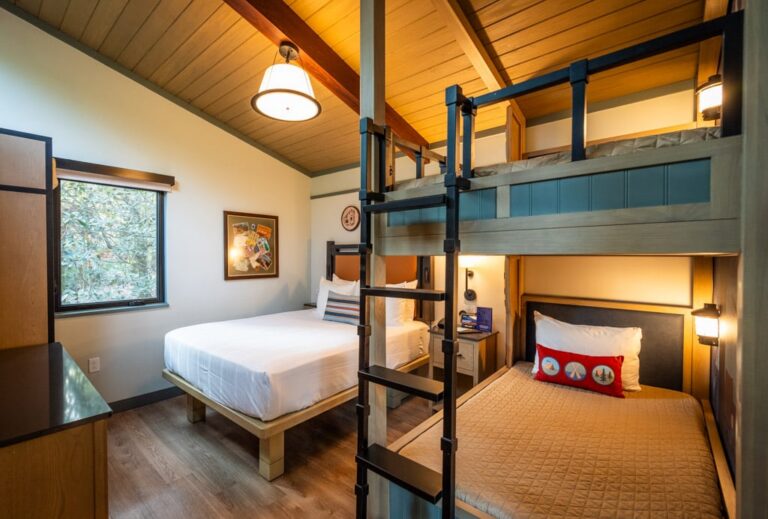
In family-oriented properties, the decoration must prioritize safety and flexibility. When looking at Top Family Suite Options: Professional Guide To Hotel Layouts, one notices that the decoration often uses rounded corners, washable wall coverings, and modular seating. The practical outcome is a room that can withstand the energy of children while still appearing upscale to the parents paying the bill.
Scenario: The “dark” Interior Room
Some hotels have “in-board” rooms with windows facing an atrium or no windows at all. Decoration here must rely on “artificial daylighting.” This involves using backlit panels that mimic windows and a color palette of warm whites and pale yellows. The goal is to prevent claustrophobia and ensure the guest’s circadian rhythm is not disrupted by the lack of natural light.
Scenario: The High-turnover Urban Hub
For hotels in cities like London or New York, where guests rarely spend time in the room except to sleep, the decoration should focus on “The Sleep Shell.” This means investing heavily in the bed’s aesthetic and acoustic surroundings. Everything else can be minimalist and space-saving. Wall-mounted lighting and fold-down surfaces are used to maximize every square inch of the footprint.
Planning, Cost, And Resource Dynamics
Successful decoration is a financial exercise as much as an artistic one. There is a “Reality Check” required for every design choice: “cheap” materials often lead to “expensive” outcomes. For example, using residential-grade wallpaper in a hotel will likely result in peeling and scuffing within six months, requiring a full room “out of service” for repairs. Commercial-grade vinyl, while more expensive upfront, can last a decade.
Resource dynamics also include “Opportunity Cost.” If a designer chooses a complex decorative lighting system that requires a specialized technician to fix, the opportunity cost is the revenue lost while that room sits empty waiting for a repair. Therefore, the most professional decoration ideas are those that are “field-serviceable” by on-site maintenance teams.
| Category | Entry-Level Scenario | Professional Standard | Enterprise/High-End | Key Nuance |
|---|---|---|---|---|
| Wall Treatments | Standard latex paint. | Commercial-grade vinyl wrap. | Acoustic fabric panels or millwork. | Durability vs. Sound Absorption. |
| Flooring | Laminate or low-pile carpet. | Luxury Vinyl Tile (LVT) or woven Axminster. | Hardwood with custom inset rugs. | Cleaning speed vs. Acoustic dampening. |
| Furniture | Flat-pack / Composite. | Solid wood / Metal frames (Contract grade). | Custom-built, integrated joinery. | Repairability vs. Aesthetics. |
| Textiles | Polyester blends. | High-rub count linen/cotton blends. | Natural silks and wools (treated). | Fire rating compliance is non-negotiable. |
In the long run, sustainability is the ultimate cost-saver. Decoration that utilizes timeless materials and high-quality construction reduces the frequency of full-scale renovations. A property that renovates every seven years with quality materials will often outperform a property that “refreshes” every three years with low-quality items, both in terms of guest reviews and the bottom line.
The Professional Toolkit: Strategies And Ecosystems
Professionals don’t just “buy furniture”; they manage an ecosystem of suppliers, installers, and maintenance protocols. The real problem being solved by a professional toolkit is “Consistency at Scale.” In a 300-room hotel, every room must look identical and meet the same safety standards. This requires a strategy of “Standardized Customization,” where the base elements are the same, but the art or soft goods vary slightly to provide a boutique feel.
Hidden limitations often exist in the “integration” phase. For instance, a beautiful new decorative headboard might block the existing electrical outlets. A professional designer uses a “Technical Survey” before finalizing decoration ideas to ensure that the “Ecosystem” of the room (power, HVAC, lighting) is not compromised by the aesthetic additions.
The Power Of The Mood Board
A mood board is not just a collection of pretty pictures; it is a strategic document that outlines the “Texture-to-Color Ratio.” It ensures that the room has enough visual interest without becoming overwhelming. For a professional, the mood board also includes “Specification Sheets” that detail the Martindale rub count for fabrics and the fire-retardant ratings for all materials, ensuring compliance with local laws.
Procurement And Lead Times
One of the most overlooked “tools” in the decorator’s kit is the procurement schedule. Decoration ideas are worthless if the furniture takes 24 weeks to arrive while the hotel is losing money on empty rooms. Professionals use “Stocking Programs” and “Local Sourcing” to mitigate the risks of global supply chain disruptions, ensuring that the decoration can be maintained and replaced as needed.
Risk Landscape And Failure Modes
The “Risk Taxonomy” of hotel decoration includes structural, operational, and human errors. A structural error might be hanging a heavy mirror on a drywall without proper blocking, leading to a safety hazard. An operational error is choosing a white carpet for a pet-friendly hotel—a decision that will lead to constant cleaning failures. Human errors often occur during the installation phase, where delicate finishes are damaged by untrained labor.
Small errors in decoration often compound into systemic failures. For example, if the bedside lamps are too dim for reading, guests will move them closer to the bed, potentially straining the cords and creating a fire hazard or simply causing a “cluttered” look that ruins the room’s aesthetic. Practical mitigations involve “Guest-Proofing” the decoration—ensuring everything is securely fastened, easy to use, and inherently safe.
The “dust Trap” Failure
A common failure in amateur decoration is the creation of “dust traps”—areas that are impossible for housekeeping to reach quickly. This includes high ledges, intricate carvings, or gaps between the furniture and the wall. In the hospitality industry, if it can’t be cleaned in 30 seconds, it shouldn’t be there. Professional decoration ideas prioritize “Cleanability” as a core design pillar.
The “tech Obsolescence” Risk
Integrating technology directly into the furniture (like built-in iPod docks from the 2000s) is a classic failure mode. Technology moves faster than furniture cycles. The professional approach is to provide “Power and Portals”—plenty of USB-C ports and wireless charging pads—without embedding specific devices that will be obsolete in two years. This keeps the decoration relevant for much longer.
Governance, Maintenance, And Sustainability
Static systems fail in the hotel industry. Decoration must be treated as a “Living System” that requires constant governance. This means having a “Lifecycle Management” plan for every item in the room. Why do some hotels look “tired”? It is usually because they lack a systematic approach to maintenance. They wait for things to break rather than replacing them on a schedule.
Sustainability is no longer an “extra”; it is a governance requirement. This involves using Low-VOC (Volatile Organic Compound) paints, FSC-certified woods, and recycled textiles. Beyond the environmental impact, these choices often lead to better indoor air quality, which is a major selling point for modern guests. Robust documentation systems allow managers to track the age and condition of all decorative elements.
- Daily: Housekeeping “Spot Check” for scuffs, tears, or burnt-out accent bulbs.
- Monthly: Deep cleaning of all soft goods and “Touchpoint” polishing.
- Quarterly: Maintenance audit of all “Mechanical” decoration (blinds, swivel TVs, hinges).
- Bi-Annually: Review of art and “Smallwares” for relevance and condition.
- Annually: Professional carpet/floor extraction and wall-covering inspection.
Dynamic adaptation also means listening to guest feedback. If multiple guests complain that the “decorative” chair is uncomfortable, the governance system should trigger a replacement with a more ergonomic model. This ensures the room’s decoration remains a tool for guest satisfaction rather than a hindrance.
Measurement, Kpis, And Evaluation
How do you measure the success of hotel room decoration ideas? It isn’t just about whether the room looks “nice.” Professionals use “Leading Indicators” like guest satisfaction scores (GSS) specifically related to “Room Decor” or “Atmosphere.” “Lagging Indicators” include the Average Daily Rate (ADR) and RevPAR (Revenue Per Available Room) increases following a renovation.
Proving success to stakeholders requires a mix of qualitative and quantitative data. A professional might show “Before and After” photos alongside data showing a 15% decrease in cleaning time due to the new minimalist furniture. They might also present sentiment analysis from online reviews, highlighting how many guests mentioned the “relaxing color scheme” or the “intuitive lighting.”
The Guest Satisfaction Audit
A professional audit involves staying in the room as a guest. This “Mystery Shopping” for design allows the professional to identify “Friction Points”—perhaps the decorative mirror is too high for an average-sized person, or the bedside rug slips on the hardwood. These qualitative indicators are more valuable than any spreadsheet for maintaining high standards.
The “repair And Maintenance” (r&m) Ratio
A key KPI for decoration is the R&M cost per room. If the new decoration ideas lead to a spike in maintenance requests, the design is a failure. A successful decorative strategy should actually lower the R&M ratio by using more durable, smarter materials that require less frequent intervention by the engineering team.
Common Misconceptions And Myths
Many myths persist in the world of hotel decoration, often leading to poor investment decisions. One common myth is that “luxury” equals “fragility.” In reality, the most luxurious hotels in the world use the most durable materials available; the luxury comes from the quality of the finish and the thoughtfulness of the layout, not from the item’s inability to withstand use.
Another myth is that “bold trends” are the best way to get noticed. While a trendy room might look great on social media today, it will look dated in eighteen months. The most successful hotel room decoration ideas focus on “Timeless Bases with Trendy Accents.” This means the expensive items (bed, wardrobe, flooring) are neutral and classic, while the inexpensive items (pillows, art, small accessories) follow the current trends.
- Myth: All-white rooms are easier to keep clean. (Reality: They show every hair and fiber, increasing cleaning pressure.)
- Myth: More furniture makes a room feel more “expensive.” (Reality: Clutter reduces perceived space and luxury.)
- Myth: High-thread-count sheets are always better. (Reality: Beyond a certain point, they are less durable and more prone to pilling in industrial laundries.)
- Myth: Professional designers are only for big budgets. (Reality: Designers often save money by preventing “expensive” mistakes.)
- Myth: Carpet is “old-fashioned.” (Reality: High-quality carpet is still the best solution for acoustic insulation in hotels.)
- Myth: “Residential” furniture works in hotels. (Reality: It lacks the fire-ratings and structural reinforcement required for commercial use.)
Ethical, Contextual, And Practical Limits
There are boundaries to what decoration can achieve. It cannot fix a fundamentally poor floor plan or a lack of basic maintenance. There is also an ethical dimension to decoration, specifically concerning “Cultural Appropriation” vs. “Cultural Appreciation.” Using local craft and art should involve fair compensation and a genuine understanding of the context, rather than just “mining” a culture for its aesthetic.
When should you *not* use a specific approach? You shouldn’t use a “High-Tech” decorative approach in a remote location where technical support is unavailable. You shouldn’t use “Minimalist” decoration in a historic chateau where it would clash with the architectural soul of the building. Practical limits are often dictated by the “Current Era” constraints—such as the need for anti-microbial surfaces in a post-pandemic world.
Every choice involves a trade-off. A room with floor-to-ceiling windows provides a stunning decorative view but introduces “Heat Gain,” which increases HVAC costs and can make the room uncomfortable. The professional’s job is to navigate these “Gray Areas,” finding the point where aesthetic beauty and practical reality meet in a way that serves both the guest and the owner.
Logic Synthesis And Conclusion
The mastery of hotel room decoration ideas is a delicate balance between “Judgment” and “Systemic Process.” It is not a singular event but a continuous cycle of observation, implementation, and refinement. A well-decorated room is a symphony of silent signals that tell the guest they are safe, valued, and understood. This is achieved through the rigorous application of spatial psychology, the strategic selection of materials, and a commitment to long-term sustainability.
Ultimately, the success of any decorative strategy is found in the absence of friction. When the design is so intuitive and the environment so harmonious that the guest never has to think about it, the professional has succeeded. The most enduring hospitality environments are those that favor human-centric logic over fleeting aesthetic whims, ensuring that the sanctuary remains intact for every traveler who walks through the door. True authority in this space is measured not by the initial applause, but by the quiet satisfaction of a guest who returns year after year.
Frequently Asked Questions
What Are The Most Durable Materials For Hotel Room Decoration?
Commercial-grade vinyl wall coverings, Luxury Vinyl Tile (LVT) for flooring, and “Contract-Grade” fabrics with high Martindale rub counts are the industry standards. These materials are engineered to withstand industrial cleaning and high-frequency use while maintaining their aesthetic appeal.
How Can A Small Hotel Room Be Made To Feel Larger Through Decoration?
Using mirrors to create depth, opting for furniture with exposed legs to show more floor area, and employing a light, monochromatic color palette are effective strategies. Additionally, removing visual clutter and using “vertical” decoration like floor-to-ceiling drapes can draw the eye upward, increasing the sense of volume.
Why Is Lighting So Important In Hotel Room Decoration Ideas?
Lighting dictates the mood and functionality of the space. By using a layered approach—ambient, task, and accent lighting—designers can ensure the room is practical for working but can also be transformed into a relaxing environment. It is the most cost-effective way to change the “feel” of a room instantly.
How Does Local Culture Influence Hotel Room Decoration?
Integrating local art, textiles, and materials creates a “Sense of Place,” which is highly valued by modern travelers. This approach helps the hotel stand out from global chains and provides guests with a unique, memorable experience that connects them to the destination.
What Is The Role Of Acoustics In Room Decoration?
Acoustics are a “hidden” decorative element. Using soft surfaces like carpets, upholstered headboards, and heavy window treatments helps absorb sound, creating the quiet environment necessary for high-quality sleep. In professional design, the “sound” of a room is as important as its “look.”