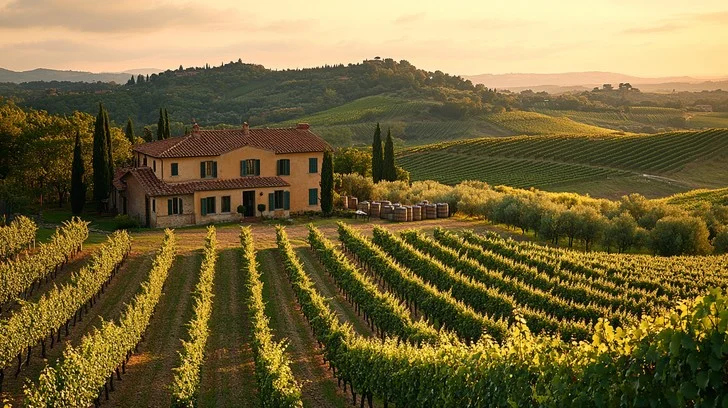
Wine Country Getaway Destinations Usa: A Luxury Strategy Guide
Selecting wine country getaway destinations usa requires an understanding of how geography, viticulture, and luxury hospitality intersect. Modern travelers increasingly seek more than just a tasting room; they demand immersive environments where the surrounding landscape informs the architectural and culinary experience. This guide explores the sophisticated dynamics of the American wine landscape, providing a framework for both leisure travelers and industry professionals to evaluate high-end viticultural retreats.
The complexity of these destinations has increased as the industry shifts from simple production facilities to integrated lifestyle ecosystems. These hubs now serve as cultural touchstones, blending agricultural heritage with contemporary design and world-class service standards. Understanding the nuances of these regions allows for more intentional planning and higher satisfaction outcomes in a competitive luxury market.
As the domestic wine market matures, the definition of a premier destination continues to evolve beyond traditional boundaries. While historical strongholds remain relevant, emerging regions are establishing new benchmarks for quality and guest engagement. This systemic overview provides the analytical tools necessary to navigate the diverse landscape of American wine country with professional-grade precision.
Wine Country Getaway Destinations Usa
The core essence of wine country getaway destinations usa lies in the concept of “Agri-Luxury,” a sophisticated blend of working agriculture and high-end hospitality. Think of these destinations as a curated gallery where the medium is liquid history and the environment is the frame. A successful destination must balance the rugged realities of farming with the polished expectations of a premium guest experience.
In a professional context, these destinations are often viewed through the lens of Destination Asset Management. Misunderstandings frequently occur when travelers assume all regions offer the same level of infrastructure or service. For instance, a rustic estate in the Texas Hill Country operates under vastly different logistics and cultural norms than a legacy property in Napa Valley.
To grasp the subject instantly, imagine a fine timepiece. The wine is the movement—the internal mechanics that drive value—while the hospitality and setting are the case and bracelet that make it wearable and aesthetic. Without the movement, it is merely jewelry; without the case, it is too fragile for the world. True wine country getaway destinations usa integrate both components into a seamless whole.
Modern interpretations of these regions now emphasize sustainability and “sense of place” over generic luxury. Professionals look for properties that demonstrate a deep connection to their specific American Viticultural Area (AVA). This authenticity creates a unique value proposition that cannot be replicated, ensuring long-term desirability for discerning discovery-seekers.
Historical Trends And Cultural Standards
The evolution of wine country getaway destinations usa is deeply rooted in the post-Prohibition era and the subsequent “Judgement of Paris” in 1976. This pivotal event validated American winemaking on a global stage, triggering a massive influx of capital into regions like Northern California. Before this shift, wine tourism was largely a local, casual endeavor centered on cellar-door sales rather than overnight stays.
During the 1980s and 1990s, the “Old Way” focused on Mediterranean-inspired architecture and formal, often intimidating, tasting environments. Quality was measured by opulence and exclusive access. However, modern standards have shifted toward “Rustic Elegance” and “Transparent Production,” where guests can see the winemaking process and engage with the land in a more tactile, less formal manner.
Historical trends also show a move away from mono-cultural tourism. Today, a premier destination must offer a holistic ecosystem including fine dining, wellness facilities, and outdoor recreation. The persistent assumption that “expensive” equals “quality” is being challenged by smaller, high-intervention boutique stays that prioritize narrative and craftsmanship over sheer scale.
The Evolution Of Quality And Prestige
Quality in the context of wine country getaway destinations usa has evolved from a focus on the bottle to a focus on the guest lifecycle. In the early 2000s, prestige was often signaled by large-scale resorts with hundreds of rooms. The contemporary standard, however, favors the “Boutique Strategy,” where limited inventory ensures personalized service and deeper brand immersion.
Furthermore, the prestige of a destination is now closely tied to its environmental stewardship. High-end travelers increasingly value LEED-certified buildings, organic or biodynamic farming practices, and carbon-neutral operations. This shift reflects a broader cultural trend in the USA toward responsible consumption and the preservation of natural resources for future generations.
The role of the “Great Hotel” within these regions has also changed. It is no longer just a place to sleep, but a central node in the traveler’s educational journey. Properties that curate bespoke experiences—such as private blending sessions or vertical tastings led by estate winemakers—command the highest prestige in the current market.
Strategic Mental Models For Destination Evaluation
To evaluate wine country getaway destinations usa effectively, one should employ the “Terroir-Hospitality Integration” model. This framework assesses how well the hotel’s services and design reflect the specific agricultural characteristics of the region. A property that ignores its surroundings in favor of a generic “luxe” aesthetic often fails to provide a memorable or high-value experience.
Another useful heuristic is the “Seasonality-Utility Matrix.” For laypeople, this helps identify when a region is most beautiful vs. most functional. For professionals, it prevents decision errors related to overcrowding or limited service during the “crush” (harvest season). Understanding the rhythmic cycles of the vineyard allows for more strategic scheduling and resource allocation.
The “Access-Exclusivity Trade-off” is a third critical model. Some destinations prioritize high-volume accessibility, which offers a vibrant atmosphere but less personal attention. Others focus on extreme exclusivity, providing privacy but often at the cost of a broader social experience. Choosing the right path depends on whether the goal is social networking or personal rejuvenation.
Variations In Wine Country Getaway Destinations Usa
The American landscape offers diverse “flavors” of viticultural retreats, ranging from the maritime-influenced valleys of Oregon to the high-desert landscapes of Washington and the rolling hills of Virginia. Each region possesses a unique “Variation Matrix” that dictates the type of experience a traveler can expect.
| Variation | Target Audience | Core Advantage | Trade-offs | Relative Complexity |
|---|---|---|---|---|
| Established Legacy (Napa) | High-net-worth, status-seekers | Highest concentration of 5-star services | High cost, traffic congestion | Low (Turn-key) |
| Artisanal Cool-Climate (Willamette) | Connoisseurs, nature lovers | Intimate, education-focused | Variable weather, limited nightlife | Moderate |
| Emerging Frontier (Walla Walla) | Adventure-seekers, professionals | High value, authentic community | Remote access, fewer luxury hotels | High (Logistics) |
| East Coast Heritage (Virginia) | History buffs, regional locals | Historical depth, equestrian crossover | Humidity, inconsistent wine vintages | Moderate |
Decision logic for these variations centers on the desired level of “Vibe vs. Variety.” If the goal is a concentrated burst of world-class dining and iconic labels, an established legacy region is optimal. If the objective is discovery and a slower pace, emerging frontiers offer a higher “authenticity-per-dollar” ratio. When evaluating high-end stays, referencing a Best Luxury Accommodation Options: Professional Strategy Guide helps clarify which service tiers provide the most value for travelers.
Premium Scenarios And High-standard Outcomes
In high-end lifestyle scenarios, the wine country getaway destinations usa serve as backdrops for significant milestones or high-stakes corporate retreats. A common premium scenario involves the “Curated Private Estate” experience, where a group takes over a vineyard-adjacent property. The outcome is total privacy combined with on-demand sommelier services and farm-to-table culinary programs.
Another scenario focuses on the “Connoisseur’s Deep Dive,” where the stay is secondary to the access. In this case, a high-standard outcome is defined by securing reservations at “mailing-list-only” wineries and having a dedicated driver who is also a certified wine expert. The second-order consequence of such an experience is a lasting relationship with producers that can result in future allocations of rare vintages.
For trend-setting professionals, the “Wellness and Viticulture” crossover is a growing scenario. This involves destinations that pair wine education with high-end spa treatments utilizing grape-seed derivatives (vinotherapy). The outcome is a balanced lifestyle experience that mitigates the indulgence of wine tasting with physical recovery and mindfulness practices.
Planning, Cost, And Resource Dynamics
Planning a trip to wine country getaway destinations usa requires a realistic assessment of both direct and indirect costs. Direct costs include lodging, tasting fees, and dining. Indirect costs often involve specialized transportation (private drivers) and shipping fees for wine purchases. Ignoring these variables can lead to a significant budget overshoot or a degraded experience.
| Category | Entry-Level Scenario | Professional Standard | Enterprise/High-End | Key Nuance |
|---|---|---|---|---|
| Lodging (Per Night) | $250 – $450 | $600 – $1,200 | $2,500+ | Proximity to AVAs affects price |
| Tasting Fees (Per Person) | $25 – $50 | $75 – $150 | $250 – $500 | Fees often waived with purchase |
| Transportation (Per Day) | Rideshare ($100) | Private Car ($500) | Luxury Chauffeur ($1,000+) | Availability is sparse in rural areas |
It is important to emphasize that “cheap” often leads to “expensive” in this field. For example, opting for a remote hotel to save on lodging can result in high transportation costs and lost time. Professional travelers often consult a Best Luxury Accommodation Options: Professional Strategy Guide to ensure the property meets stringent standards for amenities and privacy.
Strategies And The Professional Toolkit
The “Real Problem” solved by a strategic approach to wine country getaway destinations usa is the paradox of choice. With thousands of wineries and hundreds of hotels, the risk of “decision fatigue” is high. Professionals use tools like AVA mapping software and concierge networks to filter options based on vintage quality and guest preferences.
One hidden limitation that professionals watch out for is “Tasting Room Fatigue.” This occurs when a guest visits too many similar facilities in a single day, leading to sensory overload and diminished returns. The strategy here is to mix large-scale “destination” wineries with small “appointment-only” estates to maintain interest and engagement levels.
Integration is key. A successful getaway integrates digital tools (like cellar tracking apps) with physical experiences (like barrel tastings). This allows the traveler to transition from a consumer to a collector, turning a temporary vacation into a long-term hobby or investment strategy.
Risk Landscape And Failure Modes
The risk taxonomy for wine country getaway destinations usa includes structural risks (economic downturns affecting luxury spend), operational risks (staffing shortages in rural areas), and human errors (over-consumption leading to health or safety issues). Small errors, such as failing to book transportation in advance, can compound into systemic failures that ruin a multi-day itinerary.
Environmental risks are increasingly relevant. Wildfires, droughts, and unseasonable frost can impact both the aesthetic quality of a destination and the availability of certain wines. Professionals mitigate this by researching the “climate resilience” of a region and maintaining flexible itineraries that can adapt to sudden environmental changes.
A practical mitigation for human error is the “1:1 Ratio Rule”—one glass of water for every glass of wine. While simple, this prevents the physical exhaustion that often plagues wine country visitors. Additionally, understanding the legal landscape regarding alcohol consumption in different states is a neutral but necessary component of risk management.
Maintenance Of Aesthetic Quality And Prestige
Static systems in the hospitality world eventually fail because guest expectations and regional trends are constantly shifting. To maintain the prestige of wine country getaway destinations usa, properties must engage in “Dynamic Adaptation.” This means regularly updating decor, refreshing culinary menus to reflect seasonal harvests, and training staff on new viticultural techniques.
Planning for a high-end trip requires a Best Luxury Accommodation Options: Professional Strategy Guide to navigate the nuances of seasonal availability and bespoke service packages. Long-term desirability is preserved by focusing on the “Total Guest Experience” rather than just the wine list.
- Quarterly audit of local winery partnerships and exclusive guest access.
- Semi-annual review of transportation logistics and vehicle fleet standards.
- Annual assessment of sustainability practices and local community impact.
- Continuous monitoring of online reputation and professional editorial reviews.
Measurement And Evaluation Of Success
In the context of wine country getaway destinations usa, success is measured through leading and lagging indicators. A leading indicator might be the number of confirmed reservations at high-demand wineries months in advance. A lagging indicator is the Net Promoter Score (NPS) or the percentage of “Repeat Visits” to a specific region or property.
Professional documentation of success might include a “Trip ROI Report,” which tracks the value of wines acquired vs. their market price, along with the qualitative assessment of hospitality standards. This data helps travelers refine their future choices and helps properties identify areas for improvement.
Proving success to a stakeholder—such as a corporate board or a family office—often involves highlighting the unique access obtained. For example, gaining entry to a private cellar or meeting a legendary winemaker is a high-value outcome that justifies the expenditure of a premium getaway.
Common Misconceptions And Myths
One persistent myth is that Napa Valley is the only destination for world-class wine in the USA. While Napa is a leader, other regions like the Willamette Valley or the Finger Lakes offer comparable quality in different varietals. Diversifying one’s portfolio of wine country getaway destinations usa leads to a more comprehensive understanding of the national viticultural landscape.
Another misconception is that the most expensive bottle or hotel is inherently the “best.” In reality, value is often found in mid-tier boutique properties that offer more personalized attention and a stronger connection to the local community. High price tags sometimes reflect branding costs rather than substantive quality improvements.
Many beginners believe that wine country is only for “experts.” However, the industry has become significantly more approachable. Most premier destinations are designed to educate the novice just as much as they cater to the connoisseur, making these getaways suitable for a wide range of knowledge levels.
Ethical, Contextual, And Practical Limits
The boundaries of premium consumption in wine country getaway destinations usa involve a social responsibility to the land and the labor force. The “Gray Area” often centers on the tension between high-end tourism and the needs of a working agricultural community. Overtourism can strain local infrastructure and drive up living costs for the people who make the wine.
Social impact should be a consideration for the ethical traveler. Supporting properties that pay living wages and engage in local philanthropy ensures that the region remains vibrant and sustainable. Furthermore, the environmental footprint of shipping wine and frequent air travel to remote regions is a contextual limit that the modern industry must address through better logistics and carbon-offset programs.
Practically, there are times when a wine country getaway is not the right choice—such as during the peak of “crush” when winemakers are too busy to engage, or during extreme weather seasons. Recognizing these constraints allows for better timing and a more respectful relationship with the producers.
Synthesis Of The Wine Country Experience
Mastering the landscape of wine country getaway destinations usa requires a balance between rigorous systemic planning and the intuitive judgment of a seasoned traveler. It is not merely about visiting a location; it is about engaging with a complex agricultural and social ecosystem. Success is found when the traveler moves beyond the role of a passive observer and becomes an active participant in the story of the land.
Ultimately, the most prestigious getaways are those that provide a sense of timelessness and connection. By applying the frameworks of Asset Management, Risk Mitigation, and Quality Maintenance, one can ensure that every excursion into American wine country is both a sensory delight and a professional-grade investment in one’s lifestyle. The true mark of a great destination is its ability to remain relevant and inspiring long after the final glass is poured.
Frequently Asked Questions
What Is The Best Time Of Year For Wine Country Getaway Destinations Usa?
While summer offers the most vibrant outdoor activity, the “Shoulder Seasons” of late spring and early autumn provide the best balance of weather, lower crowds, and access to winery staff who are less busy than during the peak harvest month of October.
Are These Destinations Suitable For Those Who Do Not Drink Alcohol?
Yes, modern wine country getaway destinations usa have evolved into holistic lifestyle hubs. They offer high-end culinary programs, extensive spa facilities, hiking, art galleries, and non-alcoholic tasting flights focused on estate-grown juices or botanical infusions.
How Far In Advance Should I Book A High-end Wine Country Hotel?
For premier regions like Napa or Sonoma, a lead time of 4 to 6 months is recommended for peak season. For emerging regions, 2 to 3 months is usually sufficient, though specific “event weekends” may require earlier planning to ensure availability.
What Should I Wear To Stay In A Premium Wine Country Resort?
The standard is “Wine Country Casual,” which blends practical outdoor attire with polished evening wear. Think breathable fabrics and comfortable footwear for vineyard tours, transitioning to smart-casual or “Agri-Chic” for high-end dinner service at the estate.
Is It Necessary To Hire A Private Driver For These Trips?
For a professional-grade experience, a private driver is highly recommended. It mitigates the risk of impaired driving, removes the stress of navigating rural roads with limited GPS, and often provides an “insider” guide who can facilitate last-minute access to exclusive tasting rooms.