Common Hotel Check In Mistakes: A Professional Guide
Common hotel check in mistakes represent a significant friction point in the modern travel experience, often impacting the overall quality of a stay. These errors range from simple logistical oversights to complex financial misunderstandings that can disrupt a professional itinerary or a personal vacation. Understanding the mechanics of the check-in process is essential for navigating the hospitality landscape effectively and ensuring a seamless transition from transit to rest.
The arrival at a great hotel serves as the initial gateway to a guest’s temporary residence. This moment is both a legal transaction and a psychological transition. While many travelers view it as a mere formality, it involves data verification, financial authorization, and resource allocation. Professional travelers often approach this phase with a standardized protocol to avoid common pitfalls that lead to administrative delays or unexpected costs.
A structured approach to the arrival process mitigates the risks associated with modern lodging complexities. As the industry shifts toward digital-first interactions, the potential for error shifts from physical documentation to digital synchronization. Recognizing these shifts allows guests to maintain control over their experience while respecting the operational constraints of the hotel staff.
Common Hotel Check In Mistakes
The core essence of common hotel check in mistakes lies in a lack of preparation regarding documentation and financial expectations. Think of the check-in process as a digital handshake between two distinct systems: the guest’s personal finances and the hotel’s property management system. If the handshake is weak or the data is mismatched, the system stalls, creating a bottleneck for everyone involved.
Professionals often interpret these mistakes as “workflow disruptions.” For a layperson, it might feel like a personal inconvenience, but for the hotel, it is a break in a strictly timed operational chain. Misunderstandings frequently occur because guests assume the booking process and the arrival process are a single, unified action. In reality, they are two separate legal events requiring different sets of verification.
The “reservation” is a promise of availability, whereas “check-in” is the execution of a contract. Most common hotel check in mistakes stem from failing to bridge the gap between these two phases. This gap includes everything from providing a different credit card than the one used for booking to arriving outside of the established operational windows without prior notification.
The Disconnect Between Booking And Arrival
Many travelers believe that once a confirmation email is received, the work is done. This assumption ignores the necessity of local compliance and payment security protocols. Hotels must verify the physical presence of the guest and the validity of the payment method to prevent fraud and ensure safety.
Verification Errors And Identity Matching
Security remains a primary driver of check-in protocols. Mistakes often occur when the name on a government-issued ID does not perfectly match the name on the reservation. This is particularly common in international travel or when using corporate booking tools that may default to a travel manager’s name.
Historical Evolution Of The Arrival Process
In the era of traditional innkeeping, the check-in was a manual, ledger-based system. Guests would sign a physical book, and the “mistakes” were largely illegible handwriting or lost paper slips. This system relied heavily on personal recognition and physical cash transactions, which provided a different set of challenges and security risks.
The transition to computerized Property Management Systems (PMS) in the late 20th century standardized the experience but introduced new technical hurdles. These systems required specific data fields to be populated before a room key could be issued. Consequently, common hotel check in mistakes began to include data entry errors and synchronization issues between travel agencies and hotel servers.
Today, the industry is moving toward “frictionless” check-in, utilizing mobile keys and facial recognition. While this reduces human interaction, it increases the risk of technical failure or user error in navigating mobile applications. The “modern standard” emphasizes speed, yet the “old ways” of manual verification persist as a necessary backup when technology fails.
From Paper Ledgers To Cloud Systems
Early computerization was localized, meaning a hotel’s data lived on a single server in the basement. Modern cloud-based systems allow for real-time updates across global chains. This shift means that common hotel check in mistakes can now follow a traveler from one property to another within the same brand.
The Persistence Of Manual Verification
Despite the prevalence of high-tech solutions, the legal requirement for physical ID verification remains in many jurisdictions. Travelers who assume digital-only interactions are sufficient often find themselves stalled at the front desk. This persistence of manual checks serves as a safety net against evolving digital fraud methods.
Conceptual Frameworks For Successful Arrivals
To avoid common hotel check in mistakes, guests can utilize the “Three-Point Verification” model. This framework involves confirming the Identity (ID), the Instrument (Payment), and the Intent (Reservation Details). By reviewing these three pillars before reaching the desk, the probability of a delay drops significantly.
Another useful mental model is the “Buffer Zone” strategy. This involves acknowledging the gap between a hotel’s official check-in time and the guest’s actual arrival. Recognizing that the room is a physical product that requires cleaning and inspection helps set realistic expectations for early arrivals and reduces frustration during peak hours.
For professionals, the “Folio Accuracy” framework is vital. This mindset treats the hotel stay as a rolling financial statement. Instead of waiting until checkout to review charges, the guest periodically verifies the “folio” during the stay. This proactive approach identifies common hotel check in mistakes related to rate codes or amenity fees before they become permanent records.
The Identity Instrument Intent Triad
This model simplifies the complex administrative requirements into three manageable categories. Identity covers your passport or driver’s license. Instrument covers your physical credit card. Intent covers your specific room requirements and duration of stay. Ensuring these three items are aligned prevents the majority of front-desk conflicts.
Understanding The Cleanliness Lifecycle
Guests often view a “ready” room as a binary state. In reality, it is a multi-stage process involving housekeeping, maintenance, and supervisor inspection. Understanding this cycle helps guests realize that an empty room is not necessarily a “ready” room, preventing unnecessary pressure on staff.
Variation Matrix Of Check In Methods
Not all arrivals are created equal, and common hotel check in mistakes vary depending on the chosen method. A traveler using a mobile app faces different risks than one utilizing a dedicated concierge service. Selecting the right method requires balancing speed against the need for personal assistance.
| Variation | Target Audience | Core Advantage | Trade-offs | Relative Complexity |
|---|---|---|---|---|
| Standard Front Desk | General Travelers | Personalized Support | Wait times during peak hours | Moderate |
| Mobile/Digital Key | Tech-Savvy/Frequent Guests | Bypasses the lobby entirely | Technical glitches/Battery life | High (Technical) |
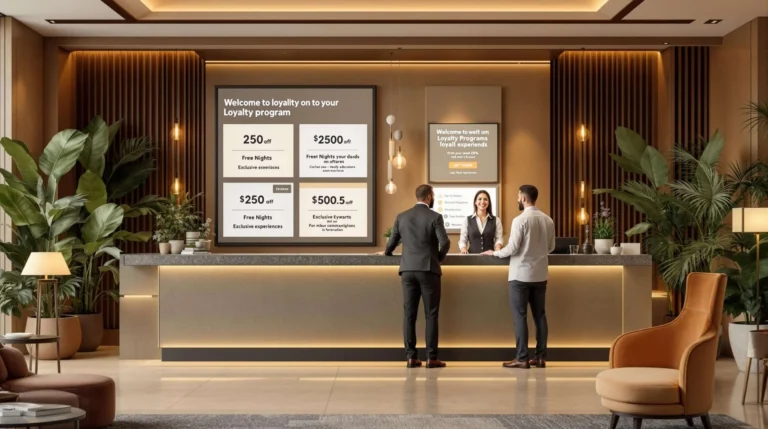
| VIP/Executive Lounge | Loyalty Members/Business | Comfort and expedited service | Higher cost or status required | Low (Guided) |
| Self-Service Kiosk | Budget/Efficiency Focused | Consistent, fast processing | Lack of human problem-solving | Medium |
Choosing the correct path depends on the specific constraints of the trip. If a traveler has complex needs, such as requesting a specific floor or clarifying billing for a corporate account, the Standard Front Desk is the safest choice. Conversely, for a late-night arrival on a simple solo trip, the Mobile Key is often superior for avoiding the “night shift” administrative delays.
Real World Scenarios And Applied Logic
Scenario one involves a guest arriving at 10:00 AM after a long-haul flight. A common hotel check in mistake here is demanding an immediate room without prior arrangement. The applied logic suggests asking the hotel to store luggage and provide access to the fitness center or lounge while the room is prepared, rather than escalating a conflict over occupancy.
Scenario two covers the “Credit Card Hold” surprise. A guest presents a debit card with limited funds, unaware that the hotel will “hold” the full room amount plus $100 per night for incidentals. The second-order consequence is a frozen bank account for several days post-departure. Proactive guests avoid this by using a credit card for the hold and a debit card only for final payment.
Scenario three focuses on the “Third-Party Booking” error. A guest arrives at a great hotel with a voucher from a discount site, but the hotel has no record of the booking. This often happens because of a synchronization failure between the site and the hotel. The logical fix is to keep the original confirmation number and the aggregator’s support line accessible on a mobile device.
Navigating The Early Arrival
Arriving early is not a mistake, but expecting a room is. Successful travelers treat an early arrival as a “pre-check-in.” They complete the paperwork, verify the payment, and then explore the city or the hotel’s public spaces. This ensures that as soon as the room is inspected, they are the first to be notified.
The Incidentals Hold Trap
Financial liquidity is often overlooked until the moment of check-in. Many common hotel check in mistakes involve the use of debit cards for authorizations. Because banks treat “holds” differently than “charges,” these funds can remain inaccessible long after the guest has checked out. Using a credit card solves this by utilizing a credit line instead of cash flow.
Planning Cost And Resource Dynamics
The financial aspect of checking in extends beyond the nightly rate. Hidden costs can include parking fees, resort fees, and the aforementioned incidental holds. Failing to account for these is one of the most common hotel check in mistakes that impacts travel budgeting. These costs are often disclosed in the “fine print” but overlooked by the average consumer.
Resource dynamics also include time. Checking in at 4:00 PM on a Friday at a major convention hotel can take 45 minutes. Checking in at 11:00 PM might take five minutes. Travelers who value their time must strategically plan their arrival to avoid peak congestion or utilize loyalty status to access priority lanes.
| Category | Entry-Level Scenario | Professional Standard | Enterprise/High-End | Key Nuance |
|---|---|---|---|---|
| Incidental Hold | $25 – $50 flat fee | $100 – $150 per night | $250+ per night/Full Mini-bar | Credit vs. Debit impacts cash flow |
| Check-In Time | Strict 3:00 PM | Guaranteed 2:00 PM | Flexible/Anytime arrival | Early access often costs extra |
| Amenity Access | Pay-per-use | Included in “Resort Fee” | Personalized/All-inclusive | Mandatory fees apply regardless of use |
Emphasizing the value of “Professional Standards” in planning prevents the “expensive” fallout of neglected maintenance. For instance, paying a slightly higher rate for a flexible check-in can be cheaper than the combined cost of breakfast, coffee, and luggage storage for a traveler stuck in a lobby for six hours.
Tools Strategies And Ecosystems
The professional toolkit for a successful stay starts with the hotel’s proprietary mobile app. These apps solve the “Real Problem” of physical line management. However, a “Hidden Limitation” is that they often fail if the user’s phone has an outdated operating system or if the local cellular network is weak. A backup strategy involving physical documentation remains essential.
Ecosystem integration also matters. If a guest books through a corporate portal, that portal must communicate with the hotel’s PMS. A common hotel check in mistake is assuming these systems are perfectly synced. Professionals often send a short “re-confirmation” email 48 hours before arrival to ensure the digital bridge is intact and their specific room preferences are noted.
Furthermore, digital wallets like Apple Pay or Google Wallet are becoming more common. While convenient, some hotels still require a physical card with a chip or magnetic stripe to process the initial authorization. Relying solely on a digital wallet is a risk that can lead to being unable to check in at properties with legacy hardware.
Leveraging Property Management Apps
Mobile apps allow guests to select their specific room from a floor plan. This level of control was previously reserved for front desk managers. Utilizing this tool allows guests to avoid rooms near elevators or ice machines, which are common sources of noise complaints later in the stay.
The Role Of Re-confirmation Emails
In a world of automated systems, a manual check can prevent a myriad of issues. A simple email confirming the arrival time, room type, and any special requirements serves as a paper trail. If a mistake occurs upon arrival, having this digital trail makes the resolution process significantly faster.
Risk Landscape And Failure Modes
Risks at check-in fall into three categories: structural (system outages), operational (overbooking), and human (miscommunication). Structural risks are the most difficult to manage, as they often result in the hotel being unable to access reservation data. In these cases, having a printed confirmation is the only way to prove a booking exists.
Operational failure modes often involve “walked” guests. This happens when a hotel overbooks and cannot accommodate a confirmed reservation. One of the most common hotel check in mistakes is failing to understand your rights in this situation. Most reputable hotels are obligated to find a comparable room at a nearby property and provide transportation to that location.
Small errors, like a front desk agent mistyping a room number or a guest forgetting to mention a pet, can compound. A pet not registered at check-in can lead to a “cleaning fee” that exceeds the cost of the room. These financial leaks are preventable through clear, transparent communication during the first five minutes of the arrival process.
System Outages And Offline Protocols
When the computer systems go down, the “great hotel” experience can quickly deteriorate. Hotels have offline protocols, but they are slow and labor-intensive. Guests who remain calm and provide clear documentation help the staff navigate these rare but stressful systemic failures.
The Overbooking Reality
A confirmed reservation is a contract, but hotels sometimes sell more rooms than they have to account for “no-shows.” Arriving late in the evening increases the risk of being the one who is “walked.” Guests can mitigate this by calling the hotel if they know their arrival will be past 6:00 PM.
Governance Maintenance And Sustainability
Maintaining a smooth check-in process requires “Dynamic Adaptation” by the hotel. Static systems fail because travel patterns change seasonally. From a guest perspective, “maintenance” involves keeping loyalty profiles updated and ensuring credit cards on file have not expired. These small tasks prevent major hurdles at the desk.
Sustainability in travel also means preserving the quality of the interaction. If a guest is consistently difficult during check-in, this can be noted in their global profile within a hotel chain. Being a “good guest” is a form of long-term mastery that often leads to better room assignments and waived fees over time.
- Update loyalty profiles quarterly to ensure contact and payment info is current.
- Review credit card expiration dates one month prior to any major trip.
- Clear old digital keys from mobile apps to prevent software conflicts.
- Verify travel insurance coverage for “trip interruption” or “lodging failures.”
- Confirm that the name on the loyalty account matches the government ID exactly.
Sustainability also applies to the environmental impact of the check-in. Opting for digital folios and mobile keys reduces paper and plastic waste. These modern choices contribute to the overall efficiency of the hotel ecosystem while streamlining the guest experience.
Measurement Kpis And Evaluation
Hotels measure check-in success through “Time to Room” and “First Contact Resolution.” A “Leading Indicator” of a poor check-in is a long queue in the lobby. For the guest, a “Lagging Indicator” is a post-stay survey or a surprise charge on their credit card statement. A professional stay is evaluated by how little the guest had to think about the administration.
A professional proves success to a stakeholder (like a business manager) by providing a clean, error-free folio at the end of the trip. Common hotel check in mistakes often result in messy folios with “correction” entries that are difficult to reconcile for expense reports. Achieving a “First-Pass Folio” is the gold standard of professional travel.
Evaluating a hotel’s performance also involves looking at how they handle errors. A great hotel is not one that never makes a mistake, but one that identifies and fixes an error during the check-in process before the guest even notices. This proactivity is a key differentiator in the luxury and high-end business sectors.
Leading Vs Lagging Indicators
A leading indicator might be the number of front desk staff available relative to the number of scheduled arrivals. If the ratio is low, a delay is predictable. A lagging indicator is the Net Promoter Score (NPS) given by guests who experienced a wait longer than ten minutes.
Documentation For Expense Reconciliation
For business travelers, the check-in is the start of an accounting process. Ensuring the corporate ID is correctly attached to the reservation at the start prevents the “tax nightmare” of trying to split a bill between personal and business expenses during checkout.
Common Misconceptions And Myths
One prevalent myth is that “checking in late gets you an upgrade.” In reality, checking in late usually means the hotel has given away the best rooms to earlier arrivals, leaving only the rooms near the laundry or elevator. Upgrades are typically managed by the “Rooms Controller” early in the morning based on loyalty status.
Another myth is that using an “incognito browser” for booking results in a better check-in experience or lower rates. While it might affect the search price, it has zero impact on the physical arrival. The hotel’s PMS does not know what browser you used; it only sees the data transmitted by the booking engine.
Many believe that “the front desk can waive any fee.” While they have some discretion, many fees (like city taxes or mandatory resort fees) are hard-coded into the system for tax compliance. Aggressively demanding these be removed is a common hotel check in mistake that creates unnecessary tension without achieving the desired result.
The Late Arrival Upgrade Fallacy
The logic behind this myth is that the hotel might be “out” of standard rooms and forced to give you a suite. However, hotels are more likely to “walk” a late-arriving guest without status than to give them a premium suite for free. Early arrival or high loyalty status are much more reliable paths to an upgrade.
The Power Of The Front Desk Agent
While agents have tools to help guests, they operate within strict corporate guidelines. A misconception is that they are being “difficult” on purpose. Understanding their “Standard Operating Procedures” (SOPs) allows guests to phrase requests in a way that makes it easier for the agent to say yes.
Ethical Contextual And Practical Limits
There are practical limits to what can be achieved during a check-in. For instance, a hotel in a historic building may not have the physical capacity to offer “quiet rooms” if all rooms face a busy street. Recognizing the contextual constraints of the property prevents unrealistic expectations that lead to dissatisfaction.
Ethical considerations involve the treatment of staff. While travelers are often tired and stressed, common hotel check in mistakes include taking that frustration out on the first person they see. Professionalism is a two-way street; guests who treat staff with respect are often the ones who receive “unadvertised” benefits like late checkouts or complimentary breakfast.
Finally, there are “Gray Areas” regarding tipping at the front desk. In some cultures, a small gratuity can facilitate a better room assignment, while in others, it is considered a breach of policy or even an insult. Researching local customs before arrival is part of the “strategic foundation” of a successful stay.
Recognizing Property Constraints
A “great hotel” in a 200-year-old European city operates differently than a brand-new resort in Las Vegas. The former may have tiny elevators and manual keys. Mistaking these “features” for “failures” is a lack of contextual awareness that ruins the travel experience.
The Etiquette Of Requesting
There is a fine line between a “request” and a “demand.” Guests who understand the practical limits of a hotel’s inventory are more successful. Asking “Do you have any rooms with a view available today?” is much more effective than stating “I was promised a view in my booking” when no such promise was made.
Conclusion
Navigating the arrival process at a great hotel requires a balance between rigorous personal systems and an empathetic understanding of hospitality operations. By avoiding common hotel check in mistakes, travelers ensure that their stay begins with clarity and financial security. This allows the transition from the chaos of travel to the comfort of the destination to be as brief and seamless as possible.
Success in this arena is not found in “hacking” the system, but in mastering the fundamental requirements of identity, payment, and communication. Whether you are a first-time traveler or a seasoned professional, the quality of your stay is often decided in the first five minutes at the desk. Developing a disciplined approach to these initial moments transforms a potentially stressful transaction into a welcoming gateway to a superior lodging experience.
Frequently Asked Questions
What Is The Most Common Hotel Check In Mistake?
The most frequent error is failing to bring the physical credit card used for the reservation. Many hotels require a physical swipe or “chip-in” to verify the payment instrument and protect against fraudulent bookings made online.
Why Does The Hotel Put A Hold On My Credit Card?
The hold covers the total cost of the room, taxes, and a predetermined amount for incidentals like room service or damages. This ensures the hotel has guaranteed funds available before you have full access to the property’s resources.
Can I Check In Early If I Arrive Before 3:00 Pm?
Early check-in is subject to room availability and is not guaranteed. While hotels strive to accommodate guests, a room must be vacated, cleaned, and inspected before it can be reassigned to a new arrival.
Do I Really Need A Physical Id If I Have A Digital Confirmation?
Yes, government-issued physical identification is a legal requirement in most jurisdictions and a security standard for all reputable hotels. Digital confirmations prove you have a booking, but ID proves you are the person authorized to use it.
What Should I Do If My Reservation Cannot Be Found?
Stay calm and provide your confirmation number and the name of the platform where you booked. If the error is on the hotel’s side, they will usually manually enter your details; if it is a third-party error, you may need to contact that provider’s support line.