10 Common Hotel Room Selection Mistakes To Avoid For A Better Stay
Common hotel room selection mistakes can compromise the quality of a professional itinerary or a personal retreat. While many travelers focus exclusively on price or brand loyalty, the nuanced architecture of a hospitality property often dictates the actual experience. A failure to account for floor plans, mechanical noise, or service proximity can lead to significant dissatisfaction regardless of the nightly rate.
The hospitality landscape has shifted toward high-density designs and multi-use spaces. This evolution means that two rooms within the same category may offer vastly different levels of comfort and utility. Understanding the structural and operational factors of a hotel is essential for any guest seeking to maximize the value of their stay.
Professional travel planners and frequent guests prioritize data-driven selection over aesthetic marketing. By analyzing the physical layout and technical specifications of a building, it is possible to identify high-performance rooms while avoiding common pitfalls. This analytical approach transforms the booking process from a game of chance into a strategic operational decision.
Common Hotel Room Selection Mistakes
At its core, the essence of identifying common hotel room selection mistakes lies in recognizing the gap between a digital listing and a physical environment. A hotel room is not merely a bed and a bathroom; it is a micro-environment within a larger, complex ecosystem. Mistakes occur when a guest assumes uniformity across a floor or a specific room class.
Consider the analogy of an apartment building where the unit next to the elevator bank carries a different lived experience than the unit at the end of the hallway. In a hotel, these differences are magnified by the transient nature of the neighbors and the constant movement of service staff. Laypeople often view a room as a static product, whereas professionals view it as a specific coordinate in a high-traffic zone.
Professional interpretations of these errors focus on logistical friction and environmental interference. A common misunderstanding is that a “higher floor” is inherently superior to a lower one. While views may improve, higher floors in large properties can suffer from extended elevator wait times and reduced water pressure during peak hours. Furthermore, the proximity to rooftop mechanical equipment can introduce low-frequency vibrations that disrupt sleep.
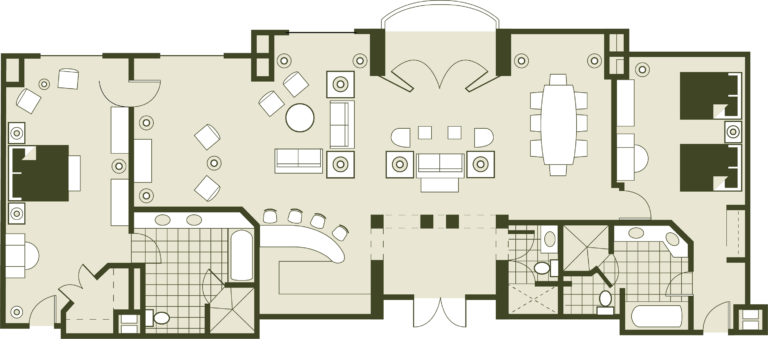
Avoiding common hotel room selection mistakes requires a shift in perspective. Instead of asking what features a room has, one should ask what external factors might influence that room. This involves looking beyond the four walls and considering the floor’s geometry, the building’s age, and the surrounding urban environment.
The Hierarchy Of Noise Pollution
Noise remains the most cited grievance in the hospitality industry. Many guests overlook the internal sound sources that are fixed within the building’s infrastructure. These include ice machines, housekeeping closets, and service elevators that operate twenty-four hours a day.
Selecting a room without reviewing its proximity to these utility zones is a frequent error. Even the most luxurious suites can be rendered unusable if they share a wall with a high-traffic service area. Analyzing a floor map before confirmation is a primary defense against these invisible distractions.
The Connectivity Paradox
In the modern era, digital connectivity is a fundamental utility. However, a room’s location can significantly impact signal strength and stability. Rooms situated deep within concrete-heavy structures or near large metallic architectural elements often experience “dead zones” or fluctuating speeds.
Travelers who require high-performance internet for professional obligations often fail to verify the location of Wi-Fi access points. Selecting a corner room may provide better views, but it often places the user at the furthest possible distance from the floor’s routing hardware. This creates a trade-off between visual aesthetics and functional productivity.
The Evolution Of Hospitality Selection Standards
Historically, hotel selection was governed by simple criteria: location, price, and star rating. In the early to mid-20th century, rooms were relatively uniform in their offerings. Travelers relied on physical brochures or travel agents who possessed localized knowledge of specific properties.
The “old ways” focused on proximity to the lobby or the grand staircase. Privacy was secondary to accessibility, as the social aspects of grand hotels were a primary draw. However, as properties grew larger and more utilitarian, the criteria for a “great room” began to favor isolation and technological integration.
Modern standards have evolved alongside advancements in building science and digital transparency. We now have access to high-resolution photography, satellite imagery of the surrounding area, and crowd-sourced floor plans. This wealth of information has made the persistence of common hotel room selection mistakes more preventable yet more complex to navigate.
Assumptions persist because travelers often rely on legacy branding rather than current facility maintenance records. A brand that was synonymous with quality a decade ago may have fallen behind in acoustic engineering or HVAC maintenance. Today, a modern traveler must be as much of a facility inspector as they are a guest.
The Rise Of The Multi-use Property
Many contemporary hotels share their footprint with residential units, retail spaces, or corporate offices. This shift has introduced new variables into the selection process. A guest might inadvertently book a room directly above a high-volume commercial exhaust system or a nightclub.
Understanding the “Mixed-Use Conflict” is critical for avoiding modern selection errors. The physical separation between different types of occupants is not always sufficient to block vibrations or scents. Researching the building’s base-level occupants is now a standard part of the expert selection protocol.
Digital Distortion And The Wide-angle Lens
Photography techniques have become highly sophisticated, often masking the true dimensions or condition of a space. Wide-angle lenses can make a cramped studio appear like a sprawling suite. This visual manipulation is a primary driver of common hotel room selection mistakes for those who rely solely on official gallery images.
The modern standard involves cross-referencing official images with amateur photos taken by previous guests. These unedited captures reveal the true wear and tear, lighting quality, and actual scale of the room. Failing to perform this visual audit is a hallmark of the inexperienced booker.
Conceptual Frameworks For Room Evaluation
To avoid common hotel room selection mistakes, professionals use mental models that prioritize functional outcomes over aesthetic appeal. These frameworks help categorize a room based on its intended use and potential limitations. By applying these heuristics, a traveler can filter out properties that do not meet their specific requirements.
One such framework is the “Acoustic Buffer Zone.” This model encourages the guest to visualize the room not as an island, but as a component of a larger grid. It prompts the user to identify every shared wall and assess the likely noise generation of the adjacent space.
For laypeople, this framework helps them see that the quietest rooms are often those with the fewest neighbors. For professionals, it prevents the error of booking a connecting room unless it is specifically required. Connecting doors are notorious for being the weakest link in a room’s soundproofing architecture.
The Transit Friction Model
This mental model evaluates the time and effort required to move from the room to the hotel’s exit or key amenities. It is particularly useful for travelers with tight schedules or mobility concerns. Large “mega-resorts” often have hallways that stretch for several hundred meters.
If the goal is efficiency, the “Transit Friction Model” identifies rooms closest to the primary elevator bank but far enough away to avoid its noise. It highlights the hidden cost of “upgraded” rooms that are located at the extreme ends of long corridors. This prevents the mistake of trading ten minutes of walking for a slightly larger window.
The Light And Circadian Alignment Heuristic
This framework focuses on the biological impact of the room environment. It considers window orientation, the presence of blackout hardware, and the placement of artificial light sources. For international travelers managing jet lag, this model is the most important tool for recovery.
Avoiding common hotel room selection mistakes related to light involves checking for “light leaks” around PTAC units or under doors. A room that cannot achieve total darkness is a failure from a rest-optimization standpoint. This framework forces the guest to look for hardware details like “U-channel” tracks on curtains.
The Mechanical Health Assessment
This model prioritizes the functionality of the room’s climate control and plumbing systems. It focuses on the type of HVAC unit present—centralized air versus a wall-mounted PTAC (Packaged Terminal Air Conditioner). PTAC units are generally louder and less efficient at maintaining a consistent temperature.
Professionals use this model to avoid rooms where the bed is placed directly in the path of the air vent. This prevents the discomfort of air blowing directly onto the sleeper. It also emphasizes the importance of checking for recent renovation dates, which often correlate with updated mechanical systems.
Key Types And The Variation Matrix
The hospitality industry uses specific terminology to categorize rooms, yet these definitions are not standardized. A “Deluxe Room” at one property might be smaller than a “Standard Room” at another. This lack of uniformity is a major source of common hotel room selection mistakes.
Understanding the variation matrix allows a guest to decode what they are actually purchasing. It involves looking at the square footage, the bed configuration, and the included amenities. Below is a comparison of typical room variations found in major urban hotels.
| Variation | Target Audience | Core Advantage | Trade-offs | Relative Complexity |
|---|---|---|---|---|
| Standard/Entry | Budget-conscious | Lowest cost | Often near service areas | Low |
| Superior/Deluxe | Leisure travelers | Better views or floor | Premium price for minor gain | Medium |
| Executive/Club | Business travelers | Lounge access/Priority | High cost; lounge may be noisy | Medium |
| Junior Suite | Extended stay | Separate seating area | No true wall separation | High |
| Full Suite | Families/VIPs | Complete privacy | Significant financial outlay | Very High |
The “Decision Logic” for choosing between these types depends on the duration of the stay and the necessity of in-room work. For a short overnight stay, the “Standard” room is often sufficient if its location is optimized. For stays longer than three nights, the “Junior Suite” often provides the necessary psychological separation between rest and activity.
One of the common hotel room selection mistakes is overpaying for a “Superior” room that offers no tangible benefits other than a slightly higher floor. If the “Standard” room is on a quiet side of the building, it may actually be superior to a “Deluxe” room facing a busy street. Value is found in the specific location, not the marketing label.
The Niche Category Trap
Boutique hotels often feature “Unique” or “Themed” rooms. While these are visually appealing, they frequently suffer from poor ergonomic design. A room shaped like a circle or one with an open-concept bathroom can be frustrating to inhabit for more than a single night.
Travelers often make the mistake of prioritizing “character” over functionality. Professional guests tend to favor “Standardized” layouts where the location of outlets and switches is predictable. In a unique room, you may find the only power outlet is located behind a heavy wardrobe.
Accessibility Rooms For Non-accessible Users
In certain scenarios, a guest might be assigned an ADA-compliant room when the hotel is at high capacity. These rooms have different layouts, such as roll-in showers and lower counter heights. For a non-disabled guest, this can lead to water splashing across the bathroom floor or a lack of storage space.
While these rooms are essential for their intended users, receiving one accidentally is one of the common hotel room selection mistakes that can be resolved at check-in. It is important to confirm the shower type if you have a strong preference for a bathtub or a standard enclosed stall. This level of detail prevents surprises after you have unpacked.
Real-world Scenarios And Applied Logic
Applying logic to hotel selection requires simulating a stay before it happens. By running through potential scenarios, a traveler can identify failure points that would otherwise remain hidden. These scenarios help bridge the gap between theoretical knowledge and practical application.
Consider the “Conference Attendee” scenario. The common mistake here is booking a room as close to the conference center as possible. While this saves transit time, these rooms are often in the highest-traffic areas of the hotel, leading to constant hallway noise from other attendees.
A better approach is to select a room in a different wing or a separate tower. The extra three-minute walk provides a significant increase in sleep quality and mental separation from the event. This illustrates the second-order consequence of prioritizing “convenience” over “restoration.”
Scenario: The High-rise Urban Hotel
In a dense city like New York or Tokyo, the primary threat is external street noise. A guest might book a high floor to avoid the sound of sirens. However, if the hotel uses thin, single-pane glass, the sound will travel upwards and reflect off surrounding buildings.
The immediate recovery step is to request a room facing an internal courtyard or a side street with less traffic. Even a lower floor facing a quiet alley is often quieter than the 40th floor facing a major avenue. This logic counters the instinctive drive to “go higher” for peace.
Scenario: The Family Vacation Transition
Families often book two “Standard” rooms hoping for a connecting door. The mistake occurs when the hotel cannot guarantee the connection, leading to a split family and logistical chaos. This is one of the most stressful common hotel room selection mistakes for parents.
The professional strategy is to book a single “Two-Bedroom Suite” or an “Apart-hotel” unit. While the upfront cost is higher, it eliminates the operational risk of being separated. It also provides a central “hub” for the family, which reduces the friction of coordinating schedules.
Scenario: The Late-night Arrival
Travelers arriving after midnight often find that their “guaranteed” room type has been given away to an earlier guest. The mistake here is failing to notify the hotel of the late arrival time. When a hotel is overbooked, the last guests to arrive are the ones most likely to be “walked” or downgraded.
To mitigate this, one should call the front desk directly on the day of arrival. Confirming the reservation and providing an estimated arrival time creates a “human connection” that can protect the booking. It signals that the guest is diligent and expects their selected room to be ready.
Planning, Cost, And Resource Dynamics
Budgeting for a hotel room involves more than just the nightly rate. Hidden costs, such as resort fees, parking, and overpriced incidentals, can inflate a budget by 30% or more. Common hotel room selection mistakes often involve ignoring these “below-the-line” expenses during the planning phase.
Resource dynamics also include the “Opportunity Cost” of time. A cheaper hotel located twenty miles from the city center may seem like a bargain. However, once the cost of ride-shares and the value of lost time are factored in, the “expensive” city-center hotel often proves to be the more economical choice.
| Category | Entry-Level Scenario | Professional Standard | Enterprise/High-End | Key Nuance |
|---|---|---|---|---|
| Location Strategy | Outer suburbs | Business district | Prime landmark/Central | Transit costs vs. Room rate |
| Amenities | Paid Wi-Fi/No breakfast | Loyalty-tier inclusions | Full butler/Club access | Value of time/convenience |
| Cancellation Policy | Non-refundable | 24-hour flexibility | Same-day/Corporate rate | Risk of schedule changes |
| Room Condition | Unrenovated/Legacy | Mid-cycle refresh | Newly built/Flagship | Maintenance quality variance |
A “Budget-Friendly” strategy is not just about finding the lowest price; it is about cutting operational waste. This might mean choosing a hotel with a free airport shuttle or one that includes a robust breakfast. These inclusions can save a traveler $50 to $100 per day, effectively subsidizing a better room selection.
Furthermore, “cheap” often leads to “expensive” when maintenance is neglected. A low-cost hotel with poorly filtered air or a lumpy mattress can result in a day of lost productivity due to illness or fatigue. Investing in a “Professional Standard” room is often a form of insurance against operational failure.
The Hidden Cost Of “non-refundable” Rates
Many common hotel room selection mistakes are driven by the lure of the “Prepaid” discount. While saving 15% is attractive, it creates a rigid constraint. If your flight is canceled or your meeting is moved, the entire cost of the stay is forfeited.
Professionals generally opt for “Flexible” rates unless they are absolutely certain of their schedule. The ability to pivot is a resource that has a tangible value. Treating the extra $20 for flexibility as a “risk premium” is a more sophisticated way to manage a travel budget.
Resort Fees And Transparency Gaps
Resort fees are mandatory additions that cover amenities like pool access or fitness centers. Many booking platforms do not include these in the initial price sort. Falling for the “Base Rate” without checking for these fees is a recurring error.
Always scroll to the “Terms and Conditions” or the final checkout page to see the true total. In some markets, like Las Vegas or Orlando, the resort fee can nearly equal the room rate. Being aware of these costs allows for a more accurate comparison between properties.
The Professional Toolkit For Room Selection
Experts do not rely on intuition alone; they use a specific set of tools and strategies to ensure a successful stay. The “Real Problem” these tools solve is information asymmetry. Hotels know exactly which rooms have the smallest windows or the loudest pipes, but they rarely share this data with the public.
One powerful strategy is the “Digital Shadow Audit.” This involves using satellite maps to see what is happening around the hotel. Is there a construction site next door? Is there a train track running behind the building? These are details that a hotel’s marketing team will never mention.
Another tool is the “Property Management System (PMS) Request.” When checking in, a professional does not just ask for “a quiet room.” They ask for a room “away from the elevator, on a high floor, facing north.” This specificity helps the front desk clerk navigate their room inventory to find a match that fits a known profile of quality.
The Role Of Loyalty Programs
Loyalty programs are more than just point-collectors; they are tools for securing better room assignments. Hotels prioritize their elite members for the “best-in-class” rooms within a specific category. This doesn’t just mean a better view; it often means a room that has been more recently maintained.
However, a hidden limitation is that “Elite Upgrades” are subject to availability. Relying on an upgrade rather than booking the necessary room type is one of the common hotel room selection mistakes that leads to disappointment. Use loyalty status as a bonus, but book the minimum level of comfort you actually require.
Third-party Booking Risks
Booking through an online travel agency (OTA) can sometimes save money, but it creates a layer of separation between the guest and the hotel. In the event of an issue, the hotel may tell you to contact the OTA, and the OTA may tell you to contact the hotel. This “Support Gap” is a significant risk for professionals.
Furthermore, some hotels reserve their least desirable rooms for OTA bookings. These are the rooms near the laundry or the dumpster. Booking directly through the hotel’s website often yields a better room assignment and more direct recourse if something goes wrong.
The Risk Landscape Of Room Selection
The risks associated with poor room selection range from minor annoyances to systemic operational failures. A “Risk Taxonomy” helps categorize these issues into structural, operational, and human errors. Understanding these failure modes allows for proactive mitigation.
Structural errors include poor soundproofing, inadequate ventilation, and insufficient electrical outlets. These are “fixed” problems that cannot be easily solved during a stay. If you are in a room with a buzzing HVAC unit, your only real option is to move to a different room.
Operational errors involve failures in service, such as a room not being cleaned or a broken elevator. These are often signs of deeper management issues. A hotel that fails at basic maintenance is likely to have other hidden problems, such as poor water quality or compromised security protocols.
The Compounding Effect Of Small Errors
Small errors often compound into much larger problems. A slightly unlevel bed can lead to poor sleep, which causes a lack of focus during a high-stakes meeting. A flickering light in the bathroom can trigger a headache. These are not “minor” issues when they impact your ability to function.
Mitigating common hotel room selection mistakes requires an immediate response to these “micro-failures.” Do not “tough it out” for a night. If something is wrong with the room’s infrastructure, request a change immediately. The longer you wait, the less inventory the hotel will have available for a swap.
Safety And Security Vulnerabilities
A critical failure mode involves the physical security of the room. This includes malfunctioning deadbolts, windows that do not lock properly, or “peep-holes” that have been tampered with. These are not just selection mistakes; they are fundamental safety risks.
Upon entering a room, a professional performs a “Five-Point Security Check.” They test the door lock, the secondary latch, the window locks, the telephone, and the adjoining room door. If any of these are compromised, the room is rejected immediately. This neutral, practical approach ensures personal safety regardless of the hotel’s reputation.
Environmental And Health Hazards
Hidden mold in HVAC units or the presence of bedbugs are extreme but real risks. These often stem from a hotel’s attempt to cut costs on deep-cleaning cycles. One of the common hotel room selection mistakes is failing to perform a quick visual inspection of the mattress seams and the air vents.
Modern travelers should also be aware of “off-gassing” in newly renovated rooms. While a new room sounds appealing, the chemicals from new carpets and paint can cause respiratory irritation. If a room smells strongly of chemicals, it may not be the healthiest environment for a long stay.
Governance And Long-term Selection Mastery
Mastering hotel selection is a dynamic process that requires constant adaptation. The hospitality industry is in a state of flux, with properties opening, closing, and undergoing management changes every day. A static list of “favorite hotels” will eventually become outdated and lead to common hotel room selection mistakes.
Long-term mastery involves maintaining a “Personal Travel Log.” This is not just a diary, but a database of room numbers, floor layouts, and specific issues encountered. Over time, this data reveals patterns—such as certain hotel chains having consistently better soundproofing than others.
Sustainable travel practices also mean choosing hotels that align with your long-term health and productivity goals. This might involve prioritizing properties with better gyms, healthier food options, or higher-quality air filtration. It is about viewing the hotel room as a tool for your own “human maintenance.”
Long-term Review Checklist
- Quarterly: Review loyalty program status and update travel profiles with specific room preferences.
- Bi-Annually: Audit your personal travel log to identify properties that are declining in maintenance quality.
- Annually: Research new property openings in your most-visited cities to find “fresh” inventory.
- Pre-Booking: Cross-reference recent guest photos from the last 30 days to check for current construction or wear.
- Post-Stay: Document the specific room number and its pros/cons to inform future selections.
Static systems fail because they do not account for the “entropy” of the hospitality world. A hotel that was perfect last year may have replaced its management team or deferred its maintenance budget this year. Dynamic adaptation means always questioning your assumptions before hitting the “book” button.
The Importance Of “feedback Loops”
Providing feedback to the hotel is a form of governance. If a room had a specific flaw, letting the management know gives them a chance to fix it for future guests. It also creates a record of your standards in their guest profile.
Sophisticated travelers know that being a “constructive critic” often leads to better treatment in the future. When a hotel knows you pay attention to the details, they are more likely to assign you a high-performing room. This is a subtle but effective way to ensure long-term quality.
Measurement And Tracking Success
How do you know if your room selection strategy is working? Professionals use “Leading” and “Lagging” indicators to evaluate their success. A leading indicator is the amount of research time spent versus the quality of the room found. A lagging indicator is the quality of sleep achieved or the lack of complaints filed.
Another metric is the “Efficiency Ratio”—the time it takes from landing at the airport to being productive in the room. If common hotel room selection mistakes lead to a long check-in process or a room move, your efficiency ratio drops. Success is a seamless transition from transit to rest or work.
Documentation And Reporting
For those traveling for business, proving the value of a more expensive room can be done through “Productivity Reporting.” If a slightly more expensive hotel resulted in zero hours of lost sleep and a successful project outcome, the ROI is clear. It moves the conversation from “cost-cutting” to “value-optimization.”
Even for leisure travelers, a “Vacation Success Score” can be helpful. Did the room provide the expected level of relaxation? Were there any environmental stressors? This honest assessment helps refine the selection process for the next trip.
Measuring Acoustic Comfort
Technically-minded travelers sometimes use decibel-meter apps to measure the ambient noise level in a room. A professional standard for a “quiet” room is typically below 35-40 decibels. If a room consistently measures higher due to mechanical hums, it is a quantifiable failure of selection.
This data can be used to request a refund or a credit. Showing a front desk manager a data point is often more effective than simply saying, “It’s too loud.” It provides an objective basis for your dissatisfaction and removes the subjectivity of the complaint.
Common Misconceptions And Myths
The travel industry is full of myths that lead even experienced travelers into common hotel room selection mistakes. These myths persist because they contain a grain of truth, but they are often applied incorrectly in a modern context. Debunking these “cheap fixes” is essential for accurate decision-making.
One prevalent myth is that “Newly Renovated” rooms are always better. In reality, a renovation might only be “cosmetic” (new carpet and paint) while the ancient, rattling HVAC system remains behind the wall. Or, the renovation might have introduced “hard flooring” (wood or tile) which significantly increases the noise from the room above.
Another misconception is that the “Corner Room” is always the largest. While this is sometimes true, many hotels use corner spaces for structural supports or strangely shaped bathrooms, resulting in less usable living space. A standard mid-hallway room often has a more efficient and spacious layout.
Myth: High Floors Are Always Quiet
As discussed earlier, sound can travel up the face of a building. Additionally, many high-rise hotels place their laundry or mechanical plants on the top floors. You might be away from the street noise but directly under a massive industrial washing machine that vibrates your ceiling at 6:00 AM.
The truth is that the “middle floors” are often the most stable. They are far enough from the lobby noise and far enough from the rooftop machinery. This is a more nuanced reality than the “higher is better” mantra.
Myth: All Rooms In A Category Are Equal
Hotels often have “Oddball” rooms that don’t fit the standard template. These might be smaller because of a stairwell or have a window blocked by a decorative architectural fin. If you don’t ask for a “Standard Layout,” you might end up in one of these “Compression Rooms.”
Believing in uniformity is one of the most common hotel room selection mistakes. Always assume there is a “worst room” in every category and take steps to ensure you aren’t assigned to it. This involves specific requests and early check-ins.
Myth: Booking Late Gets You A Better Deal
The “Last Minute” deal is largely a thing of the past for high-quality properties. Most hotels use dynamic pricing algorithms that raise rates as occupancy increases. Furthermore, booking late means you get the “leftover” rooms that no one else wanted.
A “Great Hotel” experience is built on planning. Booking early not only secures a better rate but also places you at the top of the list for better room assignments. Waiting until the last minute is a high-risk strategy that rarely pays off in comfort.
Ethical, Contextual, And Practical Limits
Every selection strategy has its limits. There are times when the “perfect room” simply does not exist. In a sold-out city during a major event, you may have to accept a suboptimal room. The ethical approach is to recognize the constraints of the hospitality staff and manage your expectations accordingly.
Contextual limits also include the age of the city. In historic European centers, hotels are often converted from ancient buildings. Expecting modern soundproofing or elevator speeds in a 300-year-old structure is unrealistic. In these cases, the “selection mistake” is choosing the wrong type of property for your needs.
There is also a “Gray Area” regarding room requests. While it is acceptable to ask for a quiet floor, demanding constant upgrades or being abusive to staff is counterproductive. The best rooms are often given to guests who are professional, polite, and clear about their needs. Selection mastery is as much about human psychology as it is about floor plans.
When To Compromise
If you are staying for less than eight hours just to sleep between flights, over-analyzing the room’s view is a waste of resources. In this context, the only metric that matters is the bed quality and the proximity to the airport. Practicality should always override the desire for “the best” when the best is not required.
Conversely, for a “Once-in-a-Lifetime” trip, the effort spent avoiding common hotel room selection mistakes should be tripled. The stakes are higher, and the emotional cost of a poor room is significant. Matching the intensity of your research to the importance of the trip is the hallmark of a balanced traveler.
The Sustainability Of Your Choices
As guests, we also have an impact on the hotel ecosystem. Requesting a daily sheet change or keeping the AC at 60 degrees while you are out has an environmental cost. A modern, ethical traveler seeks a room that is comfortable but also supports the sustainability efforts of the property. This is the new boundary of “smart” selection.
Logic Synthesis And Final Thoughts
Avoiding common hotel room selection mistakes is a multi-dimensional challenge that requires a blend of architectural awareness, logistical planning, and psychological insight. It is not enough to simply book a high-rated hotel; one must navigate the specific internal geography of that hotel to ensure a successful stay.
The balance between “Judgment” and “Systemic Process” is the key. A process-driven approach helps you filter out the obvious failures, while seasoned judgment allows you to spot the subtle red flags that a computer might miss. By treating room selection as a serious operational task, you transform the hotel from a potential source of stress into a powerful engine for productivity and rest.
Ultimately, the quality of your stay is determined before you ever set foot in the lobby. The data you gather and the frameworks you apply during the booking phase create the foundation for the experience. A disciplined approach to selection is the most effective way to guarantee that a “great hotel” truly delivers on its promise.
Frequently Asked Questions
What Are The Most Common Hotel Room Selection Mistakes For Business Travelers?
Business travelers often prioritize proximity to the elevator to save time, which leads to significant noise disturbances. Another error is failing to verify the desk ergonomics and the availability of multiple power outlets near the work surface. These factors are more critical for productivity than a high floor or a premium view.
How Can I Find Out If A Hotel Room Is Likely To Be Noisy Before I Book?
Use satellite maps to check for nearby construction, train tracks, or busy intersections. Additionally, look at guest-uploaded photos on travel forums to see if the windows are double-paned and check for the presence of heavy, sound-dampening curtains. Reading the “Negative” reviews and searching for the keyword “noise” will reveal consistent patterns.
Is It Better To Book Directly With The Hotel Or Use A Third-party Site?
Booking directly is generally superior for room selection. Hotels often reserve their best inventory for direct customers and are more willing to honor specific room requests. Furthermore, if a conflict arises, the hotel has more authority to move you to a better room without coordinating with an outside agency.
Why Is A Corner Room Not Always The Best Choice?
Corner rooms often have more windows, which can lead to increased light pollution and higher noise levels from multiple street angles. They are also frequently the furthest rooms from the elevator, adding significant walking time to every trip. In some older buildings, the corner layout results in a cramped or awkward floor plan compared to standard rooms.
What Should I Do If I Am Assigned A Room That I Know Is A “mistake”?
Politely request a change at the front desk before you move your luggage into the room. Use specific reasons, such as “proximity to the ice machine” or “lack of natural light,” rather than vague complaints. If the hotel is full, ask if a room move is possible the following morning and ensure the staff notes your preference in your profile.